
Water-Based vs Plastisol Ink: Feel, Durability and Cost
Compare water-based and plastisol screen ink by print feel, opacity, fabric, curing, durability, compliance and total job cost.
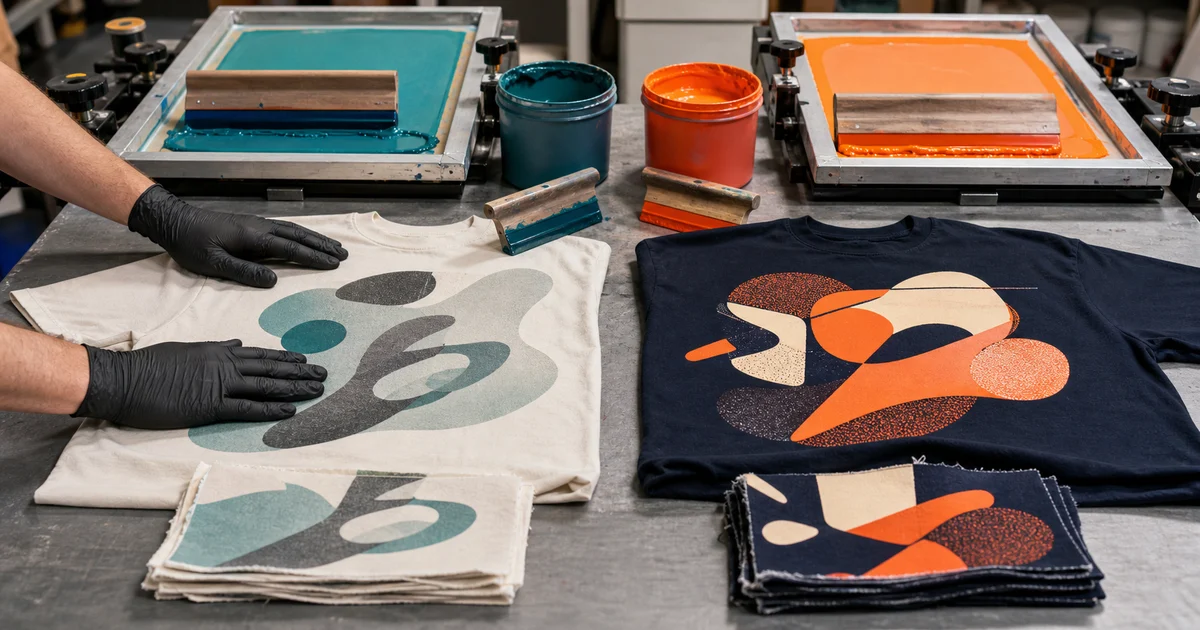
The short answer: choose water-based ink when you want a soft, low-profile print on a compatible garment and the printer has the screens, airflow and curing control to run it properly. Choose plastisol when opacity, repeatability, production flexibility or a garment-specific formulation matters more. Neither ink is automatically cheaper, greener or longer-lasting.
The difference buyers feel is often the ink deposit, not only the ink family. A light water-based print can settle into cotton, while an opaque plastisol layer usually sits more noticeably on top. High-solids water-based ink and soft-hand plastisol can narrow that gap, so approve the actual sample.
Water-based vs plastisol at a glance
| Decision point | Water-based ink | Plastisol ink |
|---|---|---|
| Main system | Water is the main carrier, with resin, pigment and possible co-solvents or additives | PVC resin and plasticiser system that solidifies under heat |
| Typical hand feel | Often soft and low-profile, especially on light cotton | Usually more noticeable; can be softened through formulation and lower deposit |
| Dark-shirt opacity | May need high-solids ink, an underbase or a suitable discharge route | Strong opaque systems are widely available |
| Fabric choice | Product-specific; cotton is a common starting point | Product ranges exist for cotton, blends, polyester and some nylon uses |
| Screen behaviour | Can dry in open mesh, so press control matters | Does not rely on water evaporation and stays workable longer on screen |
| Curing | Water must be removed and the binder fully cured to its specification | Ink film must reach its specified cure temperature |
| Compliance | Check exact formulation and certificate | Check PVC, phthalate and restricted-substance requirements for the job |
| Cost | Depends on ink, process time, dark-shirt layers and printer equipment | Depends on formulation, layers, cleanup, quantity and printer setup |
This is a buyer comparison, not a formula sheet. The manufacturer’s current technical data controls mesh, additives, time and temperature for the exact ink.
Why does water-based ink usually feel softer?
Water-based ink uses water as the main carrier. As water is removed during curing, a suitable formulation can leave a relatively low-profile binder and pigment deposit in or around the fibres. MagnaColours’ water-based ink explanation attributes its soft print to water evaporating from soft resins during cure.
The result still depends on:
- high-solids versus penetrating formulation;
- white underbase and number of layers;
- mesh and ink deposit;
- shirt colour and fabric texture;
- print dimensions; and
- whether the ink is fully cured.
A large high-solids white print on black cotton will not feel identical to a small dark ink print on natural cotton. Check the broadest solid area while wearing the sample, especially for staff working in Malaysian heat.
Can plastisol produce a soft print?
Yes. Plastisol usually forms a film on the fabric, but the printer can use a softer formulation, finer mesh, reduced ink deposit or a fashion base where the artwork and opacity allow it. ScreenPrinting.com’s soft-hand plastisol guide demonstrates that a lighter plastisol deposit can approach a water-based feel on suitable garments.
The trade-off may be lower opacity on a dark shirt. Ask the printer to show the result on your selected colour rather than approving a soft-hand claim from a white sample.
Which ink gives better colour on dark shirts?
Plastisol is often the straightforward choice for bright opaque colour because many products are formulated for strong coverage and specific fabric problems. Water-based printing can also achieve opaque results using high-solids systems, but may require more specialised production.
For example, MagnaColours’ Self Levelling product is a high-solids PVC-free water-based ink for cotton and poly-cotton, with specified mesh, additives and cure schedules. That product page demonstrates why “water-based” is not one universal ink.
Ask for:
- shirt brand, colour and composition;
- visible colours plus any underbase;
- exact ink series;
- expected hand feel and opacity;
- dye-migration plan for polyester or blends; and
- sample under the same dryer conditions as production.
The black T-shirt printing guide explains underbases and fabric colour in more detail.
How do the curing requirements differ?
Both ink families need a complete cure, but the process differs. Water-based ink must lose water and then meet the binder’s cure conditions. Plastisol must heat through the ink film to the product’s specified temperature.
ScreenPrinting.com’s curing guidance recommends forced air for production water-based curing and shows that cure temperatures differ across standard and low-cure products. Avient’s current Wilflex product selection guide similarly lists different cure ranges for plastisol formulations and different substrates.
Do not write one curing temperature into a buyer specification for every ink. Ask the printer to name the product data sheet, measure the full ink film and run the manufacturer’s recommended cure test. A dryer setting is not proof that the shirt itself reached the target.
Which is more durable?
Neither wins without production context. A correctly formulated and cured water-based print can remain part of a soft garment surface. A correctly cured plastisol film can remain flexible and opaque. Failure risks include incomplete cure, excess deposit, wrong ink for the fabric, dye migration, harsh care and poor adhesion.
Approve:
- a sample on the production garment;
- stretch only where relevant to the garment;
- a wash test agreed with the supplier;
- acceptable colour and hand after testing; and
- care instructions supplied to wearers.
Use the printing durability guide for a method-level comparison and the wash-care guide after delivery.
Is water-based ink always the more sustainable choice?
No. “Water-based” describes the main carrier, not the complete environmental performance. The formulation may contain co-solvents and additives; the factory still uses screens, emulsion, cleaning, water, heat and waste controls. Plastisol commonly uses PVC, but products also differ in phthalate content, cure temperature and restricted-substance compliance.
If the order must meet a formal standard, specify that standard. GOTS Version 8.0 prohibits printing methods using aromatic solvents, phthalates and chlorinated plastics such as PVC for GOTS-certified goods. An ordinary water-based print is not automatically GOTS compliant; the blank, inputs, factory and chain of custody must all meet the required scope.
Check the exact ink certificate through the issuing scheme. OEKO-TEX ECO PASSPORT, for example, covers textile chemicals, colourants and auxiliaries, but certification of the chemical does not certify the complete printed shirt.
For a whole-order view, read the eco-friendly printing options guide.
Which costs more in Malaysia?
There is no reliable universal price difference. A printer already equipped for water-based production may quote it efficiently. Another shop may need longer dryer time, specialised screens or additional dark-shirt layers. Plastisol may be more familiar to a supplier, while a certified or special low-cure formulation can cost more than its standard option.
Compare the same job components:
- garment and fabric colour;
- quantity and reorder pattern;
- number of ink colours and screens;
- underbase, flash and print passes;
- finished print dimensions and positions;
- ink or certification requirement;
- sample and wash test;
- cleanup or special handling included in setup; and
- delivery.
The hidden quotation cost guide helps prevent a cheaper unit price from omitting setup or testing.
Choose by use case
Water-based is a strong candidate for:
- fashion or corporate cotton T-shirts where soft hand matters;
- larger artwork that should feel less like a heavy film;
- light or natural cotton colours; and
- a documented PVC-free programme using a compatible certified formulation.
Plastisol is a strong candidate for:
- bright opaque spot colours on dark shirts;
- established repeat production with stable colour and setup;
- garments needing a purpose-built polyester, blend or nylon ink; and
- printers whose equipment and quality controls are optimised for it.
These are shortlisting rules, not guarantees. A capable supplier and correct product matter more than the category name.
Send a comparison-ready ink brief
Provide the editable artwork, finished print size, shirt brand, colour and composition, quantity, positions, required hand feel, critical colour, use conditions, care expectations and any chemical standard. Ask the printer to state:
- exact ink family and product series;
- visible colours, underbase and total screens;
- cure specification and verification method;
- sample and wash-test terms;
- compliance evidence; and
- itemised setup and unit price.
You can request like-for-like quotes from Malaysian printers or browse screen printers by state. Choose after touching and testing the same approved garment you will order.
Frequently asked questions
Is water-based ink better than plastisol?
Water-based ink is often preferred for a soft, low-profile print on suitable cotton, while plastisol is often chosen for opacity, repeatability and a wide range of garment-specific formulations. Neither is universally better; choose by artwork, fabric, feel, compliance and printer capability.
Which lasts longer, water-based or plastisol ink?
Both can be durable when the correct ink is matched to the fabric and fully cured. An under-cured print of either type can fail, so approve a production sample and ask the printer how cure and wash performance are verified.
Is water-based ink always PVC-free?
Do not assume it from the name alone. Ask for the exact manufacturer, product code and current technical or compliance document; water-based describes the main carrier, not every ingredient or certification status.
Is water-based printing more expensive than plastisol?
There is no fixed price winner. Cost depends on quantity, colours, dark-shirt underbase, print size, fabric, ink system, cure time, factory equipment, testing and certification requirements. Compare itemised quotations for the same approved specification.
Ready to compare suitable printers?
Get 5 Free Quotes