
How to Wash Printed T-Shirts So They Do Not Crack or Peel
Use a safe printed T-shirt washing routine covering care labels, cold washing, drying and ironing—plus what to do when a print starts failing.
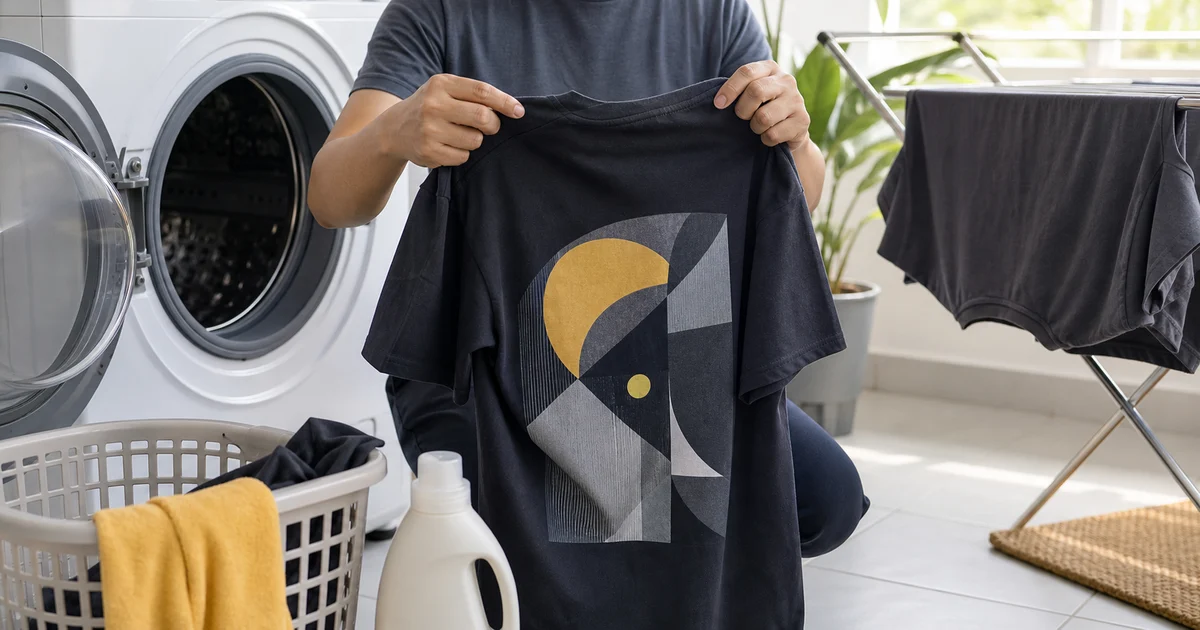
The short answer: follow the garment label and the printer’s written care instructions first. If neither gives a stricter method, turn the shirt inside out, wash it in cold water on a gentle cycle with mild detergent, avoid bleach and direct rubbing, then air dry when the label permits. Never iron directly on the print.
This routine reduces heat and abrasion, but it cannot guarantee that a poorly cured or badly applied print will survive. A production defect needs the printer’s assessment; washing is maintenance, not a repair.
Printed T-shirt wash checklist
| Stage | Safer default | Avoid unless specifically allowed |
|---|---|---|
| Before washing | Read both garment and print instructions; turn shirt inside out; separate by colour and care needs | Guessing from another shirt’s label |
| Machine setup | Cold water, gentle cycle and mild detergent | Hot cycle, bleach and aggressive stain treatment on the print |
| Loading | Give the shirt room to move; keep the decorated face inside | Rough rubbing against open zips, hooks or hard items |
| Drying | Air dry in shade when the label allows | High dryer heat or leaving a damp shirt crumpled |
| Ironing | Iron only if permitted, from the reverse and away from the design | Iron or steam directly on ink, vinyl or transfer |
The printed design and blank shirt form one product. When their instructions differ, use the milder treatment or ask the supplier which limit controls.
Read the care label before choosing a temperature
Care symbols state the maximum treatment the garment can withstand. GINETEX explains that the number in the wash tub is the maximum temperature and that milder treatment or a lower temperature is permitted. Its guidance also says care information covers applications on a garment, not only the base fabric. See the official GINETEX care-labelling principles and care-symbol guide.
The care label may not know which decoration a printer added later. Obtain a second instruction for the print method. For example, a blank cotton shirt might tolerate a hotter wash than its heat-applied graphic should receive.
Before the first wash, confirm:
- how long the supplier says to wait after printing or pressing;
- permitted water temperature and cycle;
- whether bleach, softener or stain remover is restricted;
- whether machine drying is allowed; and
- how to iron the decorated area.
There is no safe universal waiting period for every ink, adhesive and cure process. Use the job-specific instruction.
Why turn the shirt inside out?
Turning the shirt inside out keeps the printed face away from much of the direct rubbing against the drum and other clothes. Epson’s official care advice for its DTG and DTFilm workflows specifically says to wash printed T-shirts inside out in cold water and follow the garment manufacturer’s guidance. See Epson’s printed-shirt washing advice.
Before loading:
- close exposed zips and hooks on other garments;
- avoid washing the shirt with shoes, bags or hard items;
- separate dark and light colours according to their labels; and
- do not scrub two printed faces together.
For personalised team shirts, check loose items before washing. A key or clip left in a pocket can damage both the washer and the decoration.
Use cold water and a mild cycle when allowed
Cold water is a conservative default for many surface prints and transfers because it avoids unnecessary heat. Select a gentle or reduced-action cycle if the garment label permits it, especially for a large DTF, vinyl or other applied graphic.
Do not interpret “cold” as a cure for every issue. A correctly made print must already have completed its required cure or heat application before delivery. Brother notes that insufficient curing can lead to fading or wash-durability failure in its DTG curing guidance.
If the shirt is heavily soiled, ask whether a stronger cycle is acceptable rather than rubbing a concentrated chemical into the design.
Choose detergent and stain treatment carefully
Use the normal dose of a mild detergent suitable for the shirt colour and fibre. More detergent does not automatically clean better and can be difficult to rinse from an overloaded machine.
Avoid chlorine bleach unless both instructions explicitly allow it. Some transfer manufacturers prohibit bleach for their decorations; for example, STAHLS’ official thermal-emblem care sheet calls for inside-out cold washing, recommends air drying and says not to bleach or dry clean that product.
That sheet applies to a specific product, so do not copy every instruction to every print. It demonstrates why the transfer or ink supplier’s care sheet matters.
For a stain near the design:
- test the cleaner on an inconspicuous area;
- work from the reverse if the supplier permits;
- blot rather than scraping or brushing the print; and
- rinse without twisting the decorated area.
GINETEX’s hand-wash guidance likewise advises against rubbing, pulling and wringing garments during delicate hand treatment.
Air dry when the garment allows
Air drying avoids tumble-dryer heat and is the conservative choice for many transfers. Reshape the shirt gently, keep the printed section flat rather than sharply folded, and hang or lay it as the care label permits.
In Malaysia’s humid weather, give shirts airflow and do not leave them wet in a washing machine or closed basket. If outdoor sun is strong, shade drying avoids unnecessary heat on a dark print.
If the label and printer both permit tumble drying, use the stated low or gentle setting. High heat can soften or stress an applied decoration. Remove the shirt promptly rather than baking a dry garment for a longer cycle.
Sublimated polyester has no transfer film to peel, but its garment label still controls drying temperature and fabric care. The printing-method durability guide explains how different processes interact with the fabric.
Do not iron directly on the print
An iron concentrates heat and pressure in one place. It can mark ink or soften a transfer even when the blank shirt itself is ironable.
If ironing is allowed:
- turn the shirt inside out;
- keep the decoration away from direct contact with the soleplate;
- use the lower of the garment and print temperature limits;
- do not hold heat over one spot; and
- avoid steam when the print supplier prohibits it.
Do not assume baking paper or another cover sheet makes home re-pressing safe. A production heat press uses a specified temperature, time and pressure for a known material; an iron does not reproduce that control.
Care differences by printing method
| Method | Main care concern |
|---|---|
| Silk screen | Excessive heat, abrasion and chemicals can stress the ink; poor original cure cannot be fixed at home |
| DTG | Pretreatment and ink must already be fully cured; use the supplier’s cold-wash guidance |
| DTF | Protect the adhesive-backed transfer from high heat, harsh rubbing and direct ironing |
| Heat-transfer vinyl | Follow the exact vinyl maker’s wash, dry and ironing limits |
| Sublimation | No film to peel, but follow the polyester garment’s heat and colour-care label |
| Embroidery | Check thread, backing and garment instructions; protect raised stitching from snagging |
For DTF-specific ordering and sample checks, see the Malaysia DTF printing guide.
What should you do if a print starts cracking or peeling?
Stop using high heat and do not pull loose edges. Photograph the whole shirt and a close-up, then record:
- order or invoice reference;
- garment code and size;
- first date worn and washed;
- wash temperature, cycle, detergent and drying method;
- whether several shirts from the same order are affected; and
- where the failure appears on the design.
Contact the supplier before using glue, an iron or a home heat press. Those attempts can change the evidence and make the damage worse. Ask whether the shirt should be returned for assessment and whether the remaining batch needs inspection.
When ordering replacements or a new batch, include the intended laundry routine in your brief and request written care instructions with the quotation. You can compare suitable BajuPrintz printers using the same garment, artwork and care requirements.
Frequently asked questions
Should printed T-shirts be washed inside out?
Yes, unless the garment or print supplier gives different instructions. Turning a printed shirt inside out reduces direct contact between the decorated face and the washing machine, other garments and fasteners.
What water temperature is safest for printed T-shirts?
Cold water is a conservative default for many DTG and transfer prints, but the garment label and printer's method-specific instructions take priority. A temperature printed in the care-label wash symbol is the maximum permitted treatment, not a requirement to wash that hot.
Can printed T-shirts go in a tumble dryer?
Only when both the garment label and print supplier permit it. Air drying is the lower-heat option; if tumble drying is allowed, use the stated low or gentle setting and remove the shirt promptly.
Can you iron over a printed design?
Do not place an iron directly on a printed or transferred design. If ironing is allowed by the care label, turn the shirt inside out, keep direct heat away from the decoration and follow the printer's temperature guidance.
Can washing repair a print that is already peeling?
No. Gentle washing may slow further damage but cannot restore failed adhesion or cure. Stop applying heat, photograph the problem and ask the supplier for an assessment before trying glue, ironing or re-pressing.
Ready to compare suitable printers?
Get 5 Free Quotes