
Eco-Friendly T-Shirt Printing Options in Malaysia: Buyer Guide
Compare lower-impact shirt, ink, print and ordering choices in Malaysia, then verify certificates and production claims before buying.
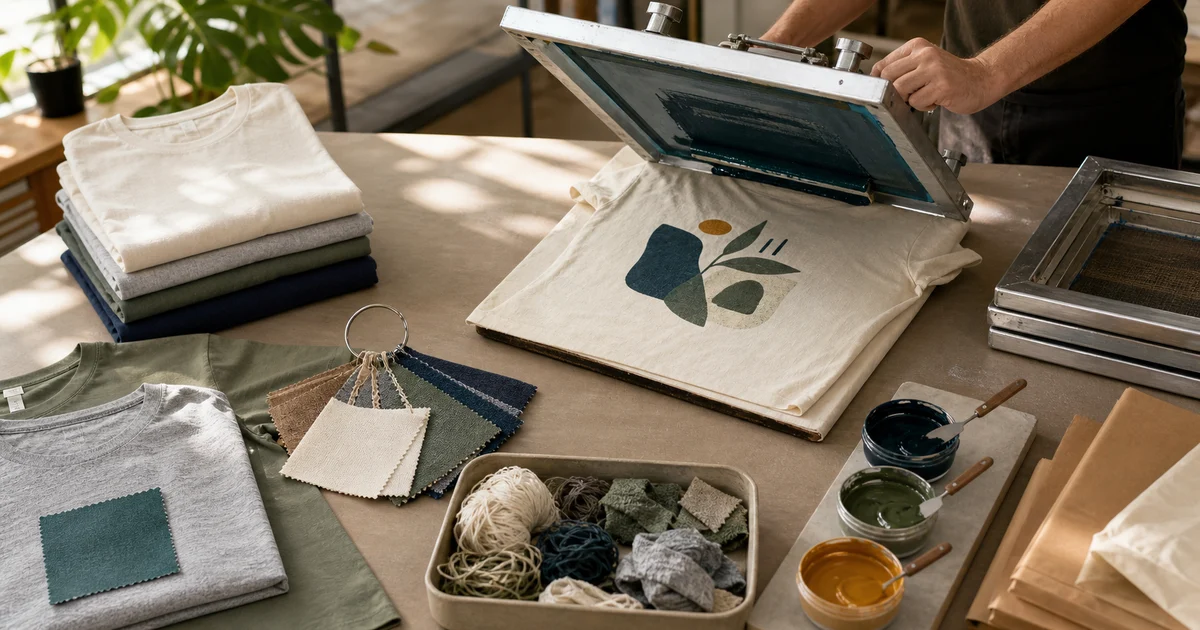
The short answer: there is no single “most eco-friendly” T-shirt printing method. For a Malaysian buyer, the strongest practical plan is to order only what will be used, choose a durable fit-for-purpose garment, verify fibre and chemical claims, limit unnecessary print coverage, and approve a tested process. Method names such as water-based, organic, recycled, DTF or sublimation are not proof by themselves.
Start with the whole shirt, not only the ink. A low-impact ink on an unsuitable garment that is rarely worn is a weak outcome. A well-sized order, durable print and documented supply chain give you a claim that is easier to defend.
Lower-impact options at a glance
| Option | Where it can help | What the buyer must verify |
|---|---|---|
| Right-sized order and confirmed sizes | Avoids unused shirts and emergency replacements | Named size list, realistic spare policy and final quantity |
| Certified organic cotton | Provides verified organic-fibre content under the chosen scheme | Label grade, scope certificate, product and shipment evidence |
| Certified recycled fibre | Tracks claimed recycled input through a chain of custody | Standard, percentage, supplier scope and transaction evidence |
| Water-based screen ink | Can create a soft, low-profile print on suitable garments | Exact formulation, compliance, fabric, opacity, cure and wastewater handling |
| Reduced ink coverage and fewer colours | Uses a simpler print plan and can improve comfort | Finished dimensions, screen count, underbase and physical sample |
| Low-cure compatible ink | May permit a lower specified curing temperature | Product data sheet, actual dryer settings and verified cure—not the phrase alone |
| Sublimation | Creates colour inside compatible polyester rather than a raised print layer | Polyester source, full product life, transfer-paper waste and exact garment use |
| DTF or DTG for suitable short runs | Can avoid multi-screen setup for detailed, lower-quantity artwork | Film, powder or pretreatment inputs, rejected prints, cure and durability |
None of these rows is a universal environmental ranking. Compare the option that fulfils your actual brief and ask the supplier to document the part you plan to claim.
Reduce unnecessary production before choosing an ink
The simplest lower-waste decision is not producing shirts without a likely wearer. Collect sizes against the exact garment, reconcile totals and set spare quantities from the event or staffing risk—not a generic percentage.
Use the Malaysia bulk size guide to gather named sizes. If demand is uncertain, compare a smaller first run plus a planned reorder with one large speculative order. Include setup and delivery in that comparison because several urgent batches can also add cost and transport.
Avoid replacing usable shirts merely to update a date or sponsor list. When possible, design the core garment for repeat use and place short-lived campaign information on another item.
Choose a garment that suits the real use
“Natural” does not automatically mean better for every job, and “recycled” does not automatically mean durable. An indoor corporate T-shirt, outdoor running top and one-day event shirt have different requirements.
Compare:
- fibre composition and verified source;
- fabric weight, opacity and expected wear;
- comfort in Malaysian heat and humidity;
- colourfastness, shrinkage and pilling sample;
- compatibility with the selected ink and curing conditions; and
- whether the wearer will actually keep using it.
The cotton versus dry-fit guide helps match material to activity. Use certified organic cotton when its properties suit the job; choose certified recycled polyester only when a performance synthetic is genuinely useful.
What do GOTS, GRS and OCS prove?
Certification names cover different scopes.
The current GOTS Version 8.0 standard covers processing of certified organic fibres and includes environmental, chemical and social criteria. Its label grades require at least 95% certified fibre content for “Organic” and at least 70% for “Made with organic materials”. It also restricts printing methods using aromatic solvents, phthalates and chlorinated plastics such as PVC for GOTS-certified goods.
Textile Exchange explains that the Organic Content Standard tracks certified organic content through the supply chain. Its RCS and GRS overview says both standards certify recycled materials and chain of custody, while GRS adds a higher minimum recycled percentage plus processing, chemical, environmental and social requirements.
Do not combine these into a vague “eco certified” claim. Record the exact standard and scope.
Verify the order, not only the supplier
A certified company may also produce non-certified items. GOTS explicitly warns that not every product made or sold by a certified operation is GOTS certified. Its certified supplier database guidance tells buyers to check the scope certificate and obtain a transaction certificate for the specific shipment.
Before printing a certification mark or making a public claim, ask:
- Is the blank garment or the finished printed product certified?
- Which legal company and facility hold the certificate?
- Does the certificate list this product category and process?
- Is it current for the production date?
- What transaction or shipment evidence will you receive?
- Are you permitted to reproduce the certification logo or wording?
Do not place a scheme logo on the shirt merely because a fabric catalogue mentions it. Certification marks have licensing and labelling rules.
Treat water-based ink as a specification, not a green shortcut
Water-based screen ink uses water as its main carrier and can produce a soft print, especially on suitable cotton. However, ScreenPrinting.com’s ink comparison notes that water may not be the only solvent; formulations can contain co-solvents to change curing behaviour.
Ask for the exact manufacturer and product code. A useful document might show OEKO-TEX ECO PASSPORT or ZDHC conformance for that formulation. OEKO-TEX ECO PASSPORT assesses textile chemicals, colourants and auxiliaries through ingredient screening and, depending on certification level, analytical verification and site assessment.
A certificate for an ink does not certify the whole shirt or factory. Still verify garment, pretreatment, additives, cleaning, wastewater handling and curing.
Compare the complete print process
Printing method changes materials, setup and waste points:
- Screen printing: screens, emulsion, ink, cleaning and cure; strong for repeat artwork when setup is used efficiently.
- DTF: film, printed ink, adhesive powder and heat transfer; useful for detailed short runs but not film-free.
- DTG: pretreatment where required, ink and curing; can suit detailed small orders but garment compatibility matters.
- Sublimation: transfer paper and heat, normally on compatible polyester; the colour becomes part of the fibre but polyester sourcing remains relevant.
- Embroidery: thread, backing and machine time; useful for compact marks, not necessarily a lower-impact choice for large coverage.
The silk screen, DTF and DTG comparison explains production fit. Choose the process that meets quantity, artwork and garment needs with the least avoidable setup and rejects.
Use design to reduce ink without weakening the result
Large solid rectangles, several print locations and unnecessary underbases add production complexity and can make a shirt less comfortable. Consider:
- using the garment colour as part of the artwork;
- reducing non-essential print positions;
- consolidating near-identical spot colours;
- keeping the logo at the smallest readable approved size;
- avoiding a dated back print when the shirt should be reused; and
- approving opacity on the actual fabric rather than demanding maximum ink deposit.
Do not simplify a protected logo without brand approval. The silk-screen colour guide helps you ask for the total screen and underbase plan.
Durability is part of the environmental brief
An under-cured “eco” print that fails early wastes the garment. Ask the supplier to follow the ink manufacturer’s cure specification and verify production with an appropriate test. Water-based and plastisol systems can both perform well when matched to the fabric and fully cured.
Approve a sample for appearance, hand feel, stretch, colour, shrinkage and wash behaviour. Keep care instructions realistic for the user. The printing durability comparison and printed-shirt wash guide help set the test and care brief.
Send an evidence-based quotation brief
State the wearer, use period, garment material, required certification, quantity and confirmed sizes, artwork size and positions, colour count, packaging, delivery points and public claim you intend to make. Ask every supplier for:
- exact garment brand, code and composition;
- certificate number, scope and validity where claimed;
- exact ink system and current compliance document;
- proposed print and cure process;
- sample and wash-test approval;
- packaging and split-delivery plan; and
- evidence supplied with the completed order.
You can request comparable Malaysian printing quotations or browse printers by state. Compare documented specifications, not the number of green words in the proposal.
Frequently asked questions
What is the most eco-friendly T-shirt printing method?
There is no universal winner. The lower-impact choice depends on garment fibre, ink chemistry, print coverage, factory controls, durability, quantity and end use. A right-sized order that is worn often and verified with current evidence is usually more credible than choosing by method name alone.
Is water-based ink always eco-friendly?
No. Water is the main carrier, but a formulation may contain co-solvents, binders, pigments and additives. Ask for the exact ink name, current safety or compliance documents and the factory's curing and wastewater controls.
How can I verify an organic or recycled T-shirt claim?
Request a current certificate showing the supplier, product and certification scope, then ask for shipment-level evidence when the scheme uses it. A certified factory can also sell non-certified goods, so a company certificate alone does not prove your order.
Can a small T-shirt order be more sustainable than a bulk order?
It can be when the smaller quantity matches confirmed demand and prevents unused stock. Compare setup and production efficiency too; the best quantity is the smallest reliable order that meets the real need without creating avoidable leftovers or repeated rush deliveries.
Ready to compare suitable printers?
Get 5 Free Quotes