
Which T-Shirt Printing Method Lasts the Longest?
Compare sublimation, silk screen, DTG, DTF and heat transfer durability, then learn what to verify before ordering long-lasting printed shirts.
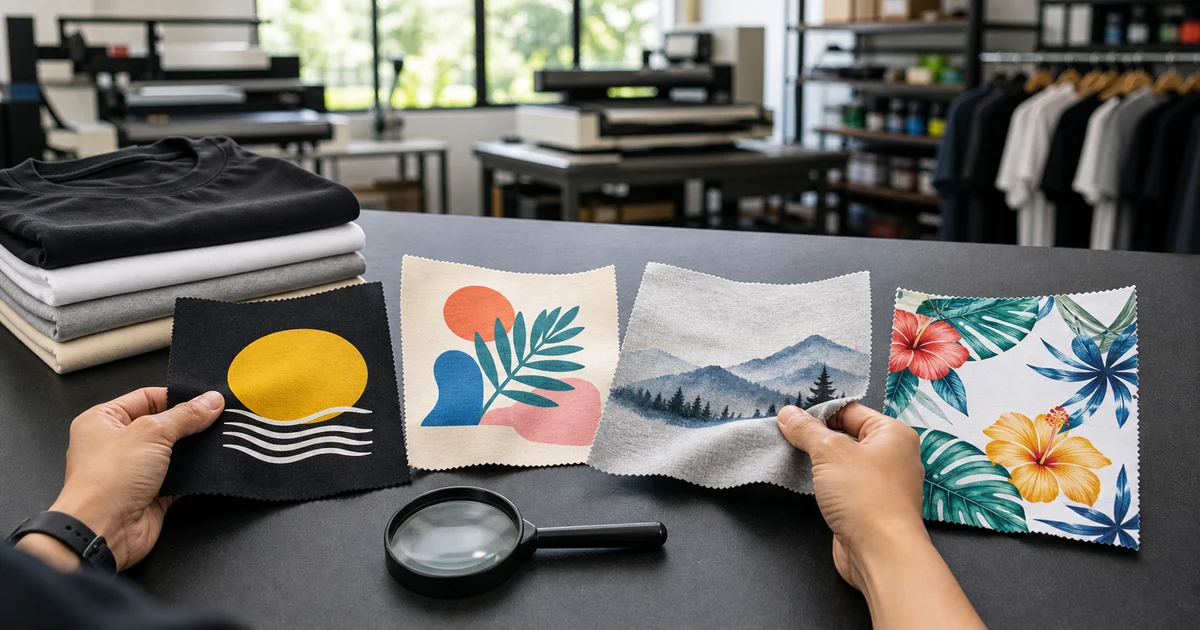
The short answer: for a compatible white or light polyester shirt, sublimation offers the strongest resistance to cracking and peeling because the dye becomes part of the material. For common cotton team shirts, a properly cured screen print is a dependable long-wearing choice. There is no universal winner across every fabric, artwork and production process.
DTG, DTF and other heat transfers can also last well. The method name alone does not prove durability; the exact ink or transfer, garment, pretreatment, curing, application and wash care determine the finished system.
Durability comparison at a glance
| Method | Why it can last | Main limitation | What the buyer should verify |
|---|---|---|---|
| Sublimation | Dye enters compatible polyester, leaving no surface film to crack or peel | Normally needs white or light polyester and cannot print white | Fabric composition, base colour and sample after wash testing |
| Silk screen | Correctly cured ink forms a strong print on suitable fabric | Poor cure, excessive ink build or wrong ink for the fabric can fail | Ink system, cure control and production wash test |
| DTG | Ink prints directly on the garment; a properly processed print can have strong wash durability | Garment, pretreatment and cure settings matter, especially on dark shirts | Exact shirt, pretreatment, curing and tested sample |
| DTF | Printed transfer and adhesive can work across many fabric types | Adhesion and flexibility depend on film, powder, pressing and fabric | Actual transfer system, press recipe and wash-tested sample |
| Heat-transfer vinyl | A specified vinyl can perform well when cut and applied to an approved fabric | Wrong time, temperature, pressure or garment can weaken adhesion | Product specification, application record and care instructions |
This is a buyer decision table, not a promise that every product within one method performs alike.
Why is sublimation resistant to cracking and peeling?
Sublimation uses heat and pressure to turn dye into gas so it penetrates polyester. Epson describes the ink as becoming part of the finished product and states that polyester goods lock in the colour without a layer that peels or cracks. See Epson’s official sublimation process overview.
That strength comes with a strict boundary. Sublimation works best on white or light-coloured polyester because the process does not add white ink. It is not the answer for a standard black cotton tee. The garment requirement matters more than a general durability ranking.
Sublimation is therefore a strong candidate for running tops, event jerseys and other polyester garments when the artwork and base colour fit the process. Ask whether the fabric is truly compatible rather than assuming every “dry-fit” shirt is the same.
When is silk screen the durable general choice?
Silk screen is often selected for repeated logos and solid-colour artwork on bulk cotton or blended shirts. A suitable ink that reaches its complete cure can withstand regular wear, but the cure must be controlled through the whole ink layer.
Avient’s technical screen-printing curing guide explains that fabric content, thickness, moisture, ink layer and dryer conditions affect cure. It also warns that under-cured ink is a common production problem. This is why “silk screen” on a quotation is not enough evidence by itself.
Ask the supplier:
- which ink system is used for the selected cotton, blend or polyester;
- how curing temperature is measured through the ink, not only at the dryer setting;
- whether a stretch or wash test is part of quality control;
- whether the approved sample uses the same underbase and ink stack as production; and
- what care instructions apply to that exact job.
For black garments, underbase and ink selection add another variable. Read the black T-shirt printing guide before comparing samples.
Can DTG last as long as screen printing?
It can perform at a comparable level within a controlled system. Brother states that the wash durability of a properly cured print made with its GTX system should be similar to a properly cured water-based screen print. That is a product-specific statement, not proof that every DTG print equals every screen print. Review Brother’s official GTX wash-durability guidance.
DTG durability depends on:
- whether the garment is compatible with the ink system;
- correct pretreatment, particularly when white ink is used;
- ink quantity and white-underbase settings;
- complete curing across the print area; and
- the wash and dry routine.
Brother also notes that cold spots or insufficient dryer time can reduce wash durability in its curing guidance. A soft new print is not a durability test; ask for evidence after laundering.
What determines DTF and vinyl durability?
DTF and heat-transfer vinyl create applied layers, so their performance depends on the bond between decoration and fabric. The exact material, adhesive, press temperature, time, pressure, moisture and garment coating all matter.
Epson’s official DTFilm explanation describes the required film, hot-melt adhesive powder, curing and heat-press transfer. It also tells wearers to wash printed shirts inside out in cold water and follow the garment maker’s instructions. See Epson’s DTG and DTFilm guide.
Do not accept “DTF lasts a fixed number of washes” without knowing:
- the film and adhesive system;
- whether the fabric has a water-repellent or other finish;
- the applied print size and solid coverage;
- the production heat-press settings;
- how the sample was washed and dried; and
- what counted as a pass or failure.
A small flexible logo and a large solid transfer place different demands on the material. Compare a sample at your actual print dimensions.
Is embroidery the longest-lasting option?
Embroidery is worth considering for a small corporate or uniform logo, although it is not printing. Thread is stitched through the garment, so there is no printed surface layer to peel. However, fine detail can close up, dense stitching can distort light fabric, and the backing or thread can still wear.
Choose embroidery because it suits the artwork, garment and desired finish—not because “stitched” automatically means indestructible. Compare it with printing using the logo embroidery cost guide.
Ask for a test that matches your order
The most useful durability evidence is a sample made with the proposed:
- garment brand, code, fabric and colour;
- artwork at actual dimensions;
- ink, transfer, thread or pretreatment system;
- production equipment and application settings; and
- written wash and dry routine.
Brother recommends wash testing when printing on a new or unknown substrate and recording the results. Its substrate-testing procedure illustrates why one good result on last week’s shirt does not automatically cover a different garment batch.
For a bulk order, ask who performs the test, how many cycles are used, what is inspected and whether the retained sample is linked to your approval. Do not invent your own national “pass” threshold; record the supplier’s method and acceptance criteria.
Make care part of the quotation
Even a well-made print can be damaged by unsuitable heat, bleach, abrasion or direct ironing. Obtain the care instructions before ordering so they are practical for the wearer. A staff uniform that needs specialist treatment may be the wrong product even if its laboratory result is strong.
Follow the printed T-shirt washing guide for a conservative home-care routine. To compare suppliers, include the garment, artwork, quantity, intended use and required test evidence when you request BajuPrintz quotations.
Frequently asked questions
Which T-shirt printing method lasts the longest?
Sublimation has excellent resistance to cracking and peeling on suitable light polyester because the colour dyes the material rather than forming a surface film. For common cotton shirts, a correctly cured screen print is a dependable durable option, but the exact garment and production quality still need testing.
Does DTF last longer than DTG?
There is no universal winner. DTF durability depends heavily on the film, adhesive, heat-press application and fabric, while DTG depends on pretreatment, ink, curing and garment compatibility; compare tested samples made with the exact proposed process.
Can a printer guarantee a number of washes?
Treat a wash-count claim as meaningful only when the supplier states the test method, garment, print system, wash and dry conditions, and pass criteria. A generic number cannot predict every design, fabric or household laundry routine.
Is embroidery more durable than T-shirt printing?
Embroidery is not a printing method, but it can be a durable choice for small logos on a suitable garment. Thread, backing, stitch density, garment weight and care all affect the result, and embroidery is not a replacement for photographic or large full-colour artwork.
Ready to compare suitable printers?
Get 5 Free Quotes