
T-Shirt Sample Approval Checklist Before Mass Production
Approve a custom T-shirt sample using a written check for garment, artwork, colour, placement, finish, sizing and production changes.
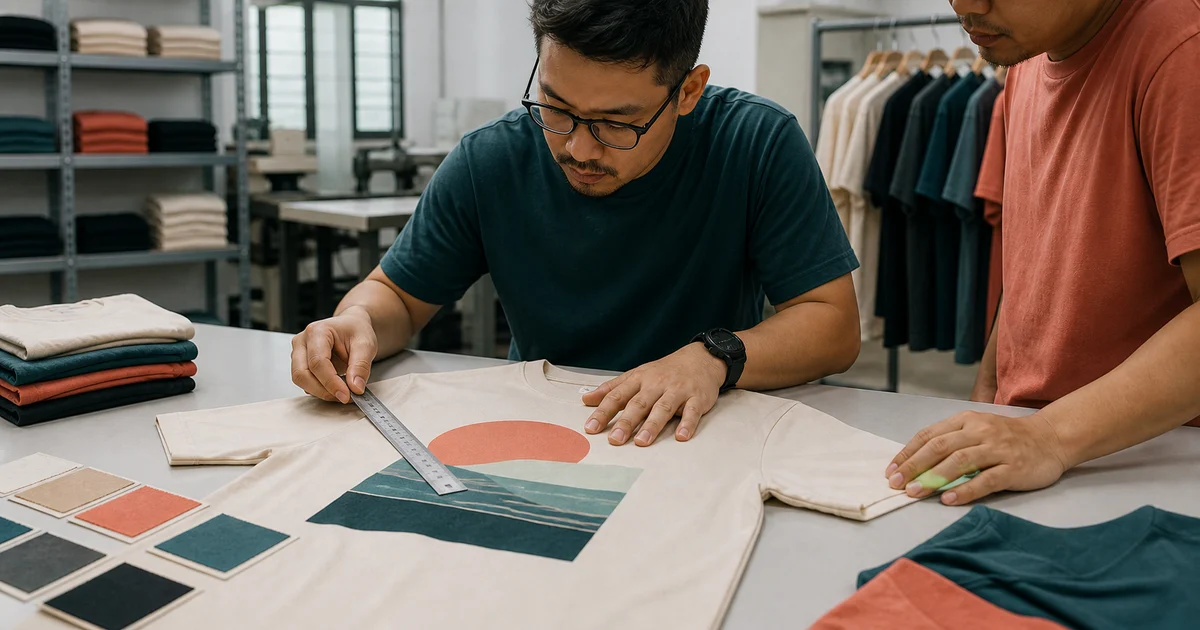
The short answer: approve a pre-production T-shirt sample only after it matches a written master specification. Check the exact garment, artwork version, colour reference, decoration dimensions and position, construction, finish, sizing and care information; then record the decision with dated photographs and any permitted tolerances.
“Looks okay” is not a production instruction. A useful approval tells the printer exactly what must stay the same when one sample becomes hundreds of shirts.
Know what each approval item can prove
| Approval item | Useful for | Cannot prove |
|---|---|---|
| Digital artwork proof | Artwork version, spelling, approximate scale and position | Fabric, fit, physical colour or print feel |
| Blank garment sample | Cut, fabric, colour, construction and size | Finished decoration quality |
| Decorated pre-production sample | Garment and decoration working together | Every unit in the future production lot |
| Size set | Fit and measurements across selected sizes | Final print on every size unless decorated |
Ask which item the supplier is providing. A photo of an earlier customer’s shirt is a reference, not approval evidence for your order.
Freeze the master specification first
Before inspecting the sample, place the final requirements in one document or approved message:
- supplier, garment brand and product code;
- fabric composition, stated weight if relevant, cut and colour;
- size range and product-specific measurement chart;
- total quantity and size breakdown;
- final artwork filename or version;
- decoration method, positions and finished dimensions;
- colour references for the garment and decoration;
- individual names, numbers, labels or packing rules;
- agreed care information; and
- delivery date, address and approved substitutions, if any.
Use the T-shirt artwork file guide to lock the production file. When placement matters, record dimensions in centimetres using the front, back and sleeve print-size guide instead of relying on “small” or “large”.
Check the garment before the decoration
Confirm that the physical blank is the product you priced and selected. Inspect:
- product code, colour and labelled size;
- fabric face, thickness and stretch;
- collar shape and recovery;
- shoulder, side and sleeve seams;
- loose thread, holes, stains or twisting;
- garment width and length against the supplied chart; and
- care and composition labels that will appear on the bulk shirts.
Measure the sample flat using one repeatable method. If a specific fit is important, compare it with a known garment and use the correct T-shirt measurement method for the bulk size decision.
Measure the artwork and placement
Do not approve from viewing distance alone. Record:
- printed or embroidered width and height;
- distance from the collar, placket, sleeve seam or centre line;
- whether the artwork is level and centred as specified;
- the relationship between front, back and sleeve elements; and
- how the position changes on the smallest and largest garment sizes.
A single decoration size may look balanced on M but oversized on a child’s shirt or too small on 3XL. If the printer will scale artwork by garment group, approve every size group and label it clearly.
Compare colour under controlled conditions
Compare the sample with the agreed physical swatch, approved reference or colour standard under consistent neutral light. Do not make a critical colour decision from separate phone photos taken in different rooms.
ASTM’s current D1729 practice for visual colour appraisal explains why standardised viewing conditions improve colour comparisons and notes D65 simulated average daylight for general colour appraisal. You do not need a laboratory for every order, but you should use the same light, background and reference for every approval decision.
If exact brand colour is important, define the acceptable reference and limitation in writing. Read the Pantone, CMYK and RGB guide before treating an on-screen value as a physical print guarantee.
Inspect the finish for the chosen method
The checks should match the production method.
| Method | Sample checks |
|---|---|
| Silk screen | Coverage, registration, edges, pinholes, opacity and hand feel |
| DTF or transfer | Edge detail, adhesion, wrinkles, scorch marks and unwanted transfer film |
| DTG | Detail, pretreatment marks, colour balance and hand feel |
| Embroidery | Stitch coverage, small text, thread colour, puckering, backing and sharp edges |
| Sublimation | Panel alignment, colour consistency, white gaps and seam placement |
Inspect the shirt in normal light, then look closely. Stretch only as the garment would normally be worn; an aggressive pull test is not a substitute for an agreed durability test.
Test the high-risk condition before approval
Add a specific trial when the use creates material risk. Examples include:
- one agreed wash cycle for repeat-use uniforms;
- movement and sweat exposure for sportswear;
- embroidery comfort against skin;
- print flexibility on stretch fabric;
- opacity on dark shirts; or
- scanning a required QR code at final printed size.
Record the test method and pass condition before testing. ISO’s current ISO 3758:2023 care-labelling overview explains that care symbols communicate the most severe textile-care treatments that avoid irreversible damage. Confirm that the supplied care instruction is suitable for the approved garment and decoration; do not invent a washing claim from one informal test.
Keep the signed approval master unwashed and undamaged. Use a duplicate when the test may change the sample.
Record one of three clear decisions
Use a simple status:
- Approved: the sample and master specification can enter production unchanged.
- Approved with listed corrections: production may begin only after the supplier confirms the exact corrections in writing or supplies a revised proof.
- Rejected: the sample must be corrected and presented again.
Your approval record should contain the order reference, sample date, artwork version, garment code, photographs, measured dimensions, colour reference, corrections, approver’s name and approval time. Save the same record with the quotation and payment documents.
Do not write “approved except as discussed”. Put every condition in the approval itself.
Control changes after approval
Require the supplier to stop and ask before changing the garment code, fabric, colour, decoration method, artwork file, dimensions or production location. A stock shortage does not make an unapproved substitute equivalent.
For transactions covered by Malaysia’s Consumer Protection Act 1999, sections 34 and 35 address goods supplied by description and by reference to a sample or demonstration model. Review the official KPDN copy of Act 599 for the scope and exact wording. This guide is an operational checklist, not legal advice, and commercial contracts may have additional terms.
Send the production release as one controlled message
Attach the final specification, approved artwork and sample record. State the final quantity, size breakdown and the sentence: production may proceed only to this approved version. Ask the printer to acknowledge it before mass production starts.
Use the supplier selection checklist if a quotation still lacks an approval process. Once the specification is ready, you can request comparable quotations through Baju Printz and ask each printer to price the same sample requirement.
Frequently asked questions
Is a digital mockup enough to approve a bulk T-shirt order?
A digital mockup can confirm artwork version and approximate placement, but it cannot prove the garment's fit, fabric, print feel, embroidery finish or physical colour. Use a decorated physical sample when those characteristics materially affect the order.
Should you wash a T-shirt sample before approving mass production?
A wash test is useful for a large, repeat-use or durability-sensitive order when the method and acceptance criteria are agreed. Test a duplicate or test sample so the signed approval master remains available for comparison.
Who should approve the pre-production sample?
Name one authorised approver who checks the final brief and collects any stakeholder comments. One consolidated approval prevents conflicting instructions from different departments or chat threads.
Can the printer change the blank T-shirt after sample approval?
Only with your written acceptance of the replacement product. Ask for its code, colour, measurements and fabric details, and require a new sample or proof when the change affects fit, appearance or decoration.
Must every bulk shirt look perfectly identical to the sample?
Manufacturing can involve limited variation, so critical tolerances should be agreed before production. The bulk order should still match the approved description, artwork and sample within those written limits.
Ready to compare suitable printers?
Get 5 Free Quotes