
How to Choose a T-Shirt Printing Supplier in Malaysia: 12-Point Checklist
Compare Malaysian t-shirt printers using a practical checklist for quotations, samples, artwork, quality control, delivery and payment.
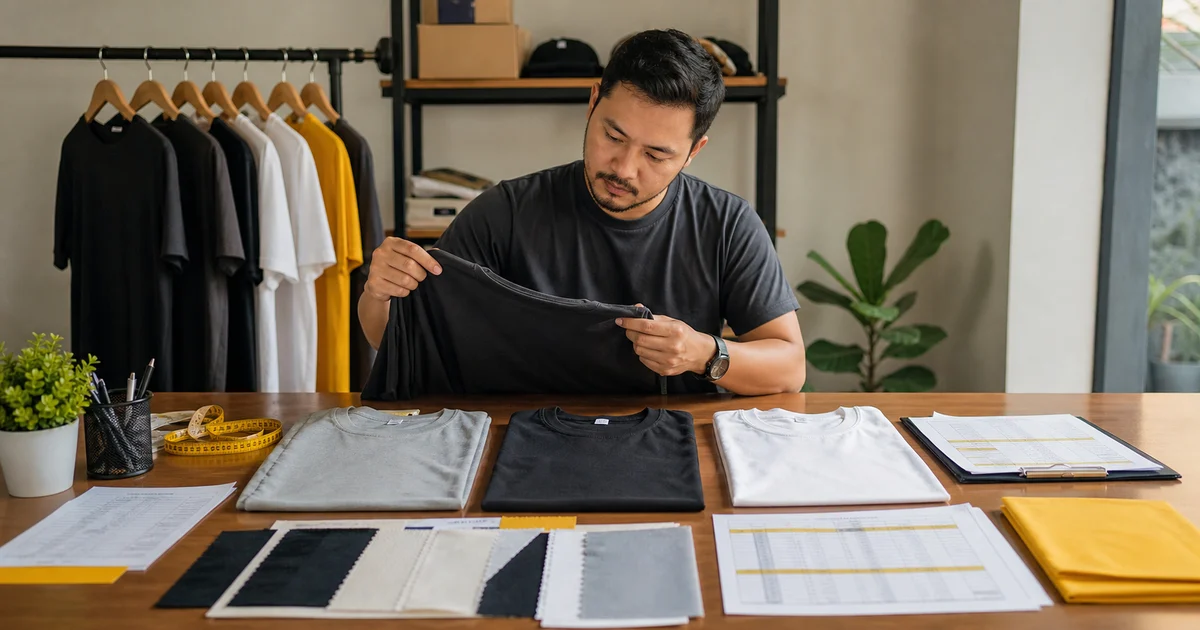
The short answer: choose the printer who removes uncertainty, not simply the one with the lowest price. A reliable supplier should explain the recommended print method, quote the full specification in writing, show a relevant sample, obtain artwork approval and commit to a clear delivery date.
Use the 12 checks below before paying a deposit. They work for company uniforms, event shirts, class t-shirts, jerseys and merchandise orders in Malaysia.
Quick supplier comparison scorecard
| Check | What good looks like | Warning sign |
|---|---|---|
| Complete quotation | Shirt, print, quantity, sizes, delivery and tax are itemised | One total with unclear inclusions |
| Suitable print method | Recommendation matches design, fabric and quantity | One method offered for every job |
| Relevant sample | Same fabric and similar print method | Only edited product photos |
| Artwork approval | Size, position and colour shown before production | Production starts from a chat screenshot |
| Colour control | Pantone, colour reference or approved sample is recorded | “Colour will be roughly the same” |
| Size confirmation | Brand-specific size chart is supplied | Generic S–3XL labels only |
| Production timeline | Approval, production and delivery dates are stated | “Ready soon” without a date |
| Defect policy | Reprint or remedy process is written | No answer about misprints |
| Business details | Traceable name, address and contact details | Payment requested to an unrelated account |
| Communication | Questions are answered precisely | Important specifications stay verbal |
| Payment terms | Deposit and balance milestones are clear | Full payment demanded before proof |
| Repeat-order records | Artwork, colour and shirt code can be reused | No job reference or specification record |
1. Send every supplier the same brief
A fair comparison begins with one consistent request. Include:
- shirt type and preferred fabric;
- total quantity and size breakdown;
- shirt colour;
- artwork file or a clear design reference;
- print positions and approximate dimensions;
- delivery postcode;
- required delivery date; and
- whether individual packing, names or numbers are needed.
If one printer quotes a 160gsm shirt and another quotes a 200gsm shirt, their prices are not comparable. The same applies when one quotation includes front and back printing while another includes only the front.
Need help preparing the design? Use the t-shirt printing artwork guide before requesting prices.
2. Check whether the recommended method fits the job
The supplier should be able to explain why a method suits your order:
- Silk screen is often efficient for repeated colours and larger quantities.
- DTF is flexible for detailed, full-colour artwork and smaller mixed orders.
- DTG can suit detailed artwork on compatible cotton garments.
- Embroidery gives polos and uniforms a textured, professional finish.
- Sublimation is commonly used for polyester jerseys and all-over designs.
There is no single “best” method. The right answer depends on quantity, artwork, fabric, intended use and budget. Compare the methods in silk screen vs DTF vs DTG.
3. Ask to see a relevant physical sample
A useful sample should be close to the product you are buying. For example, inspect embroidery on a polo if you are ordering embroidered polos—not a DTF print on a cotton tee.
Check the fabric weight, stitching, collar shape, print feel, colour coverage and alignment. Stretch the printed area gently. Look at the reverse of embroidery for backing and rough edges.
For a large or colour-critical order, request a pre-production sample. Confirm in writing whether the sample fee is refundable or credited to the bulk order.
4. Approve the exact shirt and size chart
The label “L” is not a measurement. Different brands and cuts can vary significantly. Ask for the supplier’s actual product code and size chart, then compare chest width and body length with a shirt that already fits.
For team orders, collect sizes only after sharing that exact chart. Record whether measurements are garment measurements or body measurements.
5. Confirm print size, position and colour
“Large logo on the front” is open to interpretation. A better approval states:
- print width and height in centimetres;
- distance from the collar or seam;
- front, back, left chest or sleeve position; and
- colour reference.
Ask for a digital proof showing the artwork on the chosen shirt colour. A screen preview is not a perfect colour guarantee, so use a Pantone reference or physical sample when precise brand colour matters.
6. Read the quotation line by line
Check whether the price includes:
- blank shirts;
- printing or embroidery;
- screen, film or digitising setup;
- artwork cleanup;
- names and numbers;
- extended sizes;
- sample production;
- individual packing;
- delivery;
- sales tax, if applicable; and
- rush-order charges.
The lowest headline price can become the most expensive after missing items are added. Use the existing Malaysia t-shirt printing price guide as a planning reference, then rely on written quotations for the actual job.
7. Build approval time into the deadline
Ask for three dates: artwork approval, production completion and delivery. Your “needed by” date is not the same as the printer’s dispatch date.
Do not count public holidays, courier time or sample revisions as production days unless the supplier confirms them. For a fixed event, keep a buffer after delivery so there is time to sort sizes and resolve shortages.
8. Put changes in writing
Calls are useful, but the final specification should live in a quotation, purchase order, email or confirmed message. Record any change to quantity, shirt colour, artwork, print size, size breakdown or delivery address.
This protects both sides and prevents an old file or earlier instruction from reaching production.
9. Ask what happens if items are defective
Before ordering, ask how the supplier handles:
- missing pieces;
- wrong sizes;
- visible print defects;
- major colour differences;
- damaged garments; and
- late delivery.
A reasonable process normally requires you to report defects promptly with photographs and keep the affected items for inspection. Agree on whether verified defects will be reprinted, repaired, replaced or refunded.
10. Verify who you are paying
Check that the quotation shows a traceable business or supplier name, contact information and payment terms. Confirm the account holder before transferring money, especially if the bank details change during the conversation.
Keep the quotation, proof of payment and approved artwork together until the order is complete.
11. Judge communication by precision
Fast replies are helpful, but precise replies matter more. A capable supplier should answer questions about fabric, method, print size, colour, timeline and inclusions without contradicting the written quote.
If important details remain vague before payment, they are unlikely to become clearer after production starts.
12. Plan for repeat orders
Company uniforms and popular merchandise are often reordered. Ask the supplier to record the garment brand and code, colour, artwork version, print dimensions, thread or ink reference and job number.
Even with those records, fabric dye lots and garment stock can change. Request a fresh confirmation when exact matching matters.
A simple way to compare suitable printers
Prepare one brief, shortlist three suppliers and score each against the table above. Baju Printz lets you browse t-shirt printing suppliers by Malaysian state or send one order brief to relevant printers.
No checklist can guarantee a perfect order, but a complete specification, relevant sample and written approval remove the most common avoidable risks.
Frequently asked questions
How do I choose a reliable t-shirt printing supplier?
Choose a supplier that gives a complete written quotation, recommends a method for your fabric and quantity, shows a relevant sample, confirms artwork and colours before production, and states the delivery date and defect policy.
Should I choose the cheapest t-shirt printing quote?
Not automatically. Compare the same shirt specification, print size, positions, colours, quantity, delivery and taxes. A cheaper quote may exclude artwork, screens, individual packing or delivery.
Should I ask for a sample before bulk t-shirt printing?
Yes for a large, colour-sensitive or repeat order. Approve a physical sample when possible, or at minimum approve a written specification and digital artwork proof before mass production.
How many t-shirt printing quotations should I compare?
Three comparable quotations are usually enough to see the market range without slowing the project. Send every supplier the same brief so the prices are genuinely comparable.
Ready to compare suitable printers?
Get 5 Free Quotes