
Heat Transfer Vinyl vs DTF: Which Is Better for Your Design?
Compare HTV and DTF for names, numbers, simple logos, gradients, personalisation, fabric compatibility and Malaysian bulk orders.
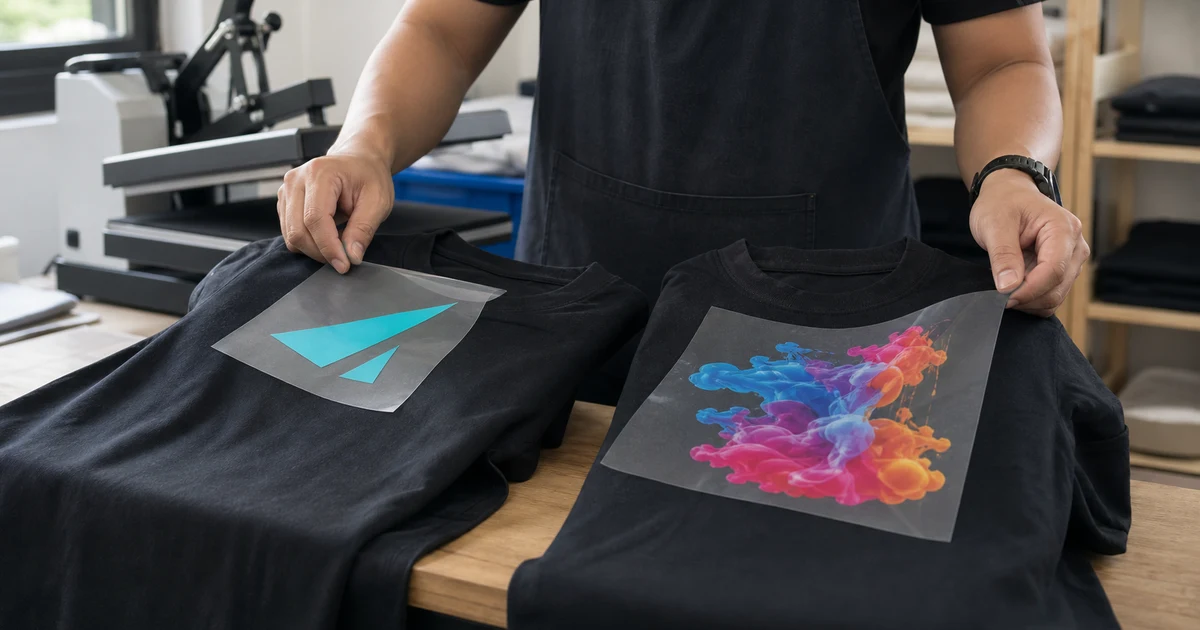
The short answer: choose heat transfer vinyl (HTV) for simple solid-colour names, numbers, small logos and one-off personalisation; choose DTF for detailed multicolour artwork, gradients and repeated full-colour designs. Neither is automatically better—the safer choice is the system that matches your artwork, garment and approval sample.
Both methods use heat and pressure to bond a decoration to a garment. The important difference is how that decoration is prepared. HTV is normally cut from coloured film and the unwanted material is weeded away. DTF prints the image onto film, adds adhesive powder, cures it and then transfers the complete graphic.
HTV vs DTF at a glance
| Buyer question | HTV | DTF |
|---|---|---|
| Best starting use | Names, numbers, simple symbols and solid-colour logos | Detailed, multicolour, gradient or photographic artwork |
| Artwork structure | Separate cut shapes; every colour may need its own layer | One printed full-colour transfer with a white backing layer |
| Personalisation | Practical for changing a name or number per garment | Practical when each variable design is detailed or multicolour |
| Fine detail | Limited by cutting, weeding and the chosen film | Can reproduce finer printed detail, subject to the DTF system and final size |
| Labour pattern | Cutting and weeding increase with design complexity | Printing, powdering, curing and pressing form one controlled workflow |
| Surface options | Standard, stretch, flock, reflective, glow and other product-specific films may exist | Finish depends on ink, powder, film and final press process |
| Main approval risk | Wrong film, incomplete weeding, lifting edges or heat damage | White outline, powder residue, heavy coverage, lifting or press marks |
These are selection tendencies, not universal specifications. “HTV” and “DTF” each cover many products, and suppliers may use different films, adhesives and production settings.
Choose HTV when every shirt needs a simple change
HTV is a practical starting point for team names, jersey numbers, staff roles, small chest marks and simple one-colour event graphics. A cutter follows the vector outline, the operator removes the unused film, and the remaining shape is heat-applied.
This workflow suits personalisation because the operator can cut a different name or number for each garment without printing a full-colour image. It also makes a solid spot colour easy to understand during approval: you can inspect the actual film swatch before production.
However, complexity creates labour. Very small islands, thin lines, distressed textures and several overlapping colours can be slow to weed and difficult to align. If every name contains different lengths, check the longest and shortest examples rather than approving only one average mockup. The jersey name and number font guide explains character clarity and roster proofing.
Choose DTF when detail and colour matter more than cutting
DTF is usually more practical when the design includes multiple colours, gradients, illustrations, photographic elements or many small details. Roland DG’s official DTF overview explains that DTF transfers complex graphics without the outline cutting and waste-removal work used for cut material.
The design is printed in reverse on a special film, typically with colour and a white layer. Adhesive powder is applied while the ink is wet, then cured before the graphic is heat-transferred. Epson’s official DTF workflow confirms that film, powder and heat pressing are separate parts of the process.
That flexibility does not remove the need for a final-size test. Very fine detail can close up, the white layer can show at an edge, and a large solid transfer can feel different from a small separated logo. Use the DTF problem-prevention checklist before approving a bulk run.
Compare the real artwork, not just the method names
Ask the supplier to quote both methods against the same production brief:
- final artwork file and version;
- finished width and height in centimetres;
- shirt model, colour and fabric composition;
- quantity and full personalisation roster;
- print position and distance from seams;
- critical colour or surface effect;
- sample and wash-check requirement; and
- delivery postcode and required receipt date.
A simple two-colour logo may still favour HTV for a small personalised batch. A one-colour design with hundreds of tiny distressed marks may be easier as DTF. The artwork’s production structure matters more than the number of colours printed on the quotation.
Send a vector file for cut HTV when possible because the cutter needs clean paths. DTF can accept raster artwork, but it still needs enough resolution, clean transparency and the correct final dimensions. The AI, PDF, PNG and SVG guide shows which source file to hand over.
Do not use one heat setting for every transfer
Time, temperature and pressure depend on the exact product and garment. Siser’s official HTV application guide lists different settings and fabric recommendations across its film range and advises testing before production because fabrics vary.
DTF settings also depend on the film, powder, ink, curing equipment and fabric. Epson’s DTF film guide states that temperature and time vary with the film, powder, fixing device and ink amount.
Therefore, ask the printer to identify the tested application recipe for your combination. A generic promise that a transfer “works on polyester” is not enough for a heat-sensitive performance shirt, coated fabric or garment with raised seams.
Approve feel and coverage at the final size
Both HTV and DTF sit on the garment surface. The wearer normally notices coverage before the method label. A small chest logo with separated elements can feel flexible, while a wide solid rectangle can cover more breathable fabric and feel warmer in Malaysia’s climate.
Print the design at the real size and assess it on the intended shirt. If it feels too heavy, ask whether the artwork can use negative space, separated elements or a smaller coverage area. Do not approve feel from a loose film swatch alone; pressing changes the final surface.
For a broader method decision, compare the longest-lasting printing methods and their limits. Durability depends on correct production, compatible materials and care—not merely on selecting the method with the strongest marketing claim.
Use one approval checklist for either method
Before production, confirm:
- the actual garment model, size and colour used for the sample;
- the exact HTV or DTF system being supplied;
- final artwork dimensions and position;
- clean edges, correct colour and accepted surface feel;
- no scorch, shine, platen box or seam-pressure mark;
- every personalised name and number against the master roster;
- the supplier’s care instructions; and
- the approved reference kept for the production check.
Use the physical sample approval checklist when the garment, transfer material or supplier is new to you.
Request a method-specific quotation
State whether you need simple variable personalisation or repeated full-colour artwork, but let each supplier declare the exact transfer system it is quoting. Baju Printz lets you send one brief for quotations or browse Malaysian t-shirt printers by location.
The best quotation will not merely say “vinyl” or “DTF”. It will identify the garment, material, artwork size, personalisation count, sample standard and delivery scope you are comparing.
Frequently asked questions
Is heat transfer vinyl or DTF better for names and numbers?
HTV is usually the simpler choice for individual names and numbers in one or a few solid colours because each item can be cut separately. DTF can be practical when the personalisation contains detailed, multicolour or gradient artwork.
Can HTV print photographs and gradients?
Standard cut HTV is best treated as solid-colour material and is not the natural choice for photographs or smooth gradients. Printed transfer films exist, so ask the supplier to state the exact material instead of treating every vinyl product as the same.
Does DTF work on more fabrics than HTV?
Both methods can cover several fabric types, but compatibility depends on the exact film, adhesive, fabric finish and application settings. Approve a test on the actual garment rather than relying on a broad fabric list.
Which feels softer, HTV or DTF?
Feel depends more on the material thickness, artwork coverage and garment than on the method name alone. A small separated design may feel lighter than a large solid block in either system, so compare final-size samples.
What should I approve before an HTV or DTF bulk order?
Approve the exact garment, artwork version, finished size, position, colour, transfer material, surface feel, edge quality and care instructions. For an unfamiliar or high-value order, request a decorated sample and an agreed wash check.
Ready to compare suitable printers?
Get 5 Free Quotes