
Custom Class T-Shirts Malaysia: Complete School Order Guide
Plan custom class t-shirts in Malaysia with a practical workflow for school approval, design, sizing, quotations, payments and delivery.
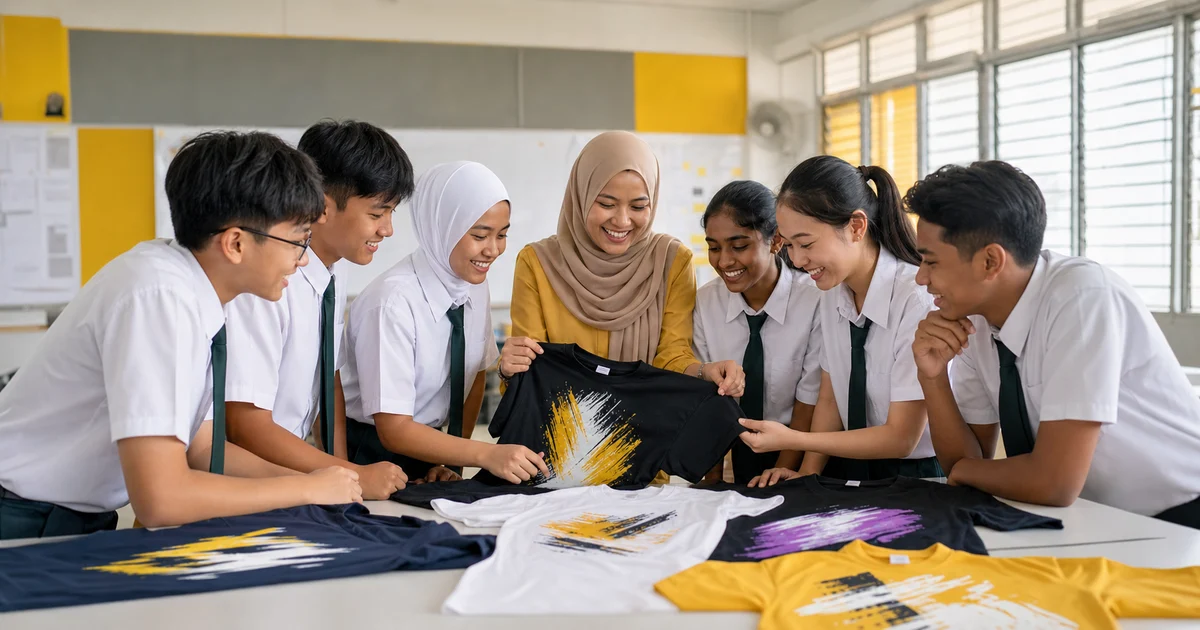
The short answer: organise a class t-shirt order through one approved brief, one final size list and one decision maker. Confirm school permission, shirt specification, artwork, individual names, total quantity, delivery date and payment before the printer starts production.
A class order becomes difficult when design votes, size replies and payment records live in different chats. The workflow below gives students, teachers and the printer one version to follow.
Class t-shirt order checklist
| Stage | Decide or collect | Do not proceed until |
|---|---|---|
| School approval | Purpose, wording, crest, teacher or adviser approval | One authorised person approves the concept |
| Product | Shirt code, fabric, colour, cut and size chart | The exact product is available in every required size |
| Artwork | Front, back and sleeve designs; print dimensions; names or numbers | A final proof is approved in writing |
| Quantity | Named wearer list, size breakdown, teacher units and deliberate spares | The totals reconcile |
| Quotation | Garments, printing, setup, personalisation, delivery and tax | Inclusions and payment terms are clear |
| Delivery | School address, recipient, required date and inspection plan | Production and delivery dates are confirmed |
1. Confirm the school rules and decision maker
Ask the class teacher or club adviser what may appear on the shirt. Obtain approval before using a school crest, official name, slogan, student nickname or sponsor logo. Record who can approve the design and who can authorise changes.
Keep one organiser responsible for sending the final specification to the printer. Class polls can help choose a theme, but they should end before artwork approval. Production should not restart every time someone changes a vote.
For a dated activity, check the current Ministry of Education academic calendar and the school’s own programme. Holidays, examinations and teacher availability can affect approvals and distribution even when the printer is ready.
2. Choose one shirt specification
Decide the product before collecting sizes. Specify:
- supplier, brand and shirt code;
- cotton, quick-dry microfiber, polyester or another fabric;
- round neck, polo, long sleeve, Muslimah, kids or unisex cut;
- shirt colour;
- available size range; and
- whether extended sizes cost more.
The size label alone is not enough. Oren Sport’s current Malaysian catalogue, for example, lists kids styles in numbered sizes and selected unisex styles across lettered sizes extending to larger sizes. That is a useful reminder that each product has its own range—check the exact supplier catalogue and measurements, not a generic S–XL chart.
Use the Malaysia t-shirt fabric guide when comfort, sports use and budget need to be balanced.
3. Prepare artwork that can be approved
Give the printer the best available artwork file and state the intended dimensions in centimetres. Identify every position: centre front, back, left chest or sleeve. A mockup should also show the selected shirt colour.
For names and numbers, use one locked spreadsheet column for the exact spelling. Decide whether the printer should reproduce capitalisation and punctuation exactly. Ask how late corrections are handled; a change after production begins may require a replacement shirt.
The t-shirt printing artwork guide explains file formats, resolution, colour references and proof checks.
4. Collect sizes without guessing
Share only the chart for the chosen product. If possible, let students try a sample or compare the chart with a shirt that already fits. Record each wearer’s name, selected size and payment status privately rather than relying on message reactions.
Do not convert age, school year or a different brand’s size automatically. Kids, unisex and fitted cuts may use different labels and measurements. The paired guide explains how to calculate a class size breakdown without inventing a standard ratio.
Before ordering, reconcile three figures:
- number of confirmed students;
- number of teachers or advisers receiving shirts; and
- any spare units deliberately approved.
The total of every size must equal the purchase quantity.
5. Compare complete quotations
Send the same brief to each printer. Ask the quotation to separate or clearly include:
- blank shirts and printing;
- artwork or setup charges;
- individual names and numbers;
- extended-size surcharges;
- physical sample costs;
- individual packing;
- delivery to the school; and
- applicable tax.
Confirm the minimum order and whether mixed sizes count together. The Malaysia MOQ guide explains why the answer can change with garment colours, artwork versions and printing methods.
6. Set payment and approval deadlines
Give the class one closing date for sizes, spelling and payment. After that date, publish a final count for checking without exposing unnecessary personal details. Only the authorised organiser should send revisions to the printer.
Ask for written dates covering artwork approval, production completion and delivery. Use the Malaysia t-shirt printing timeline to plan the stages, but follow the chosen supplier’s written commitment for the actual order.
7. Inspect before distributing
When the cartons arrive, count the shirts by size against the delivery note. Check personalised spelling, garment colour, visible print defects and damage before handing shirts out. Photograph and report any discrepancy promptly under the supplier’s stated remedy process.
Sort shirts by name or class group only after the quantity check. Keep the approved artwork, final size list, quotation and payment record together in case the class needs a replacement or repeat order.
Send one complete class brief
A good class order is not the one with the most design options; it is the one everyone can verify before production. You can browse Malaysian t-shirt printers by location or send one class order brief through Baju Printz when the specification is ready.
Frequently asked questions
How early should a class start ordering custom t-shirts?
Start as soon as the event date, budget owner and design approver are confirmed. Ask the chosen printer for written artwork, production and delivery deadlines, then keep a buffer for size collection and inspection.
Who should approve a class t-shirt design?
Use one named approver, such as the class teacher, adviser or authorised school representative. Confirm the wording, school crest, colours, print positions and final artwork before production.
Should a class order a physical sample first?
A physical sample is useful when fit, fabric, colour or print quality matters, especially for a large order. At minimum, approve the exact shirt code, size chart and digital artwork proof in writing.
Can every student have a different name or number?
Many printing methods can support individual names or numbers, but personalisation may add cost and proofing work. Submit one final spelling list and ask the supplier to confirm the charge and correction policy.
Ready to compare suitable printers?
Get 5 Free Quotes