
T-Shirt Fabric Guide Malaysia: Cotton, Microfiber and Polyester Compared
Compare common t-shirt fabrics for Malaysian weather, events, uniforms and sports, including comfort, print compatibility, weight and care.
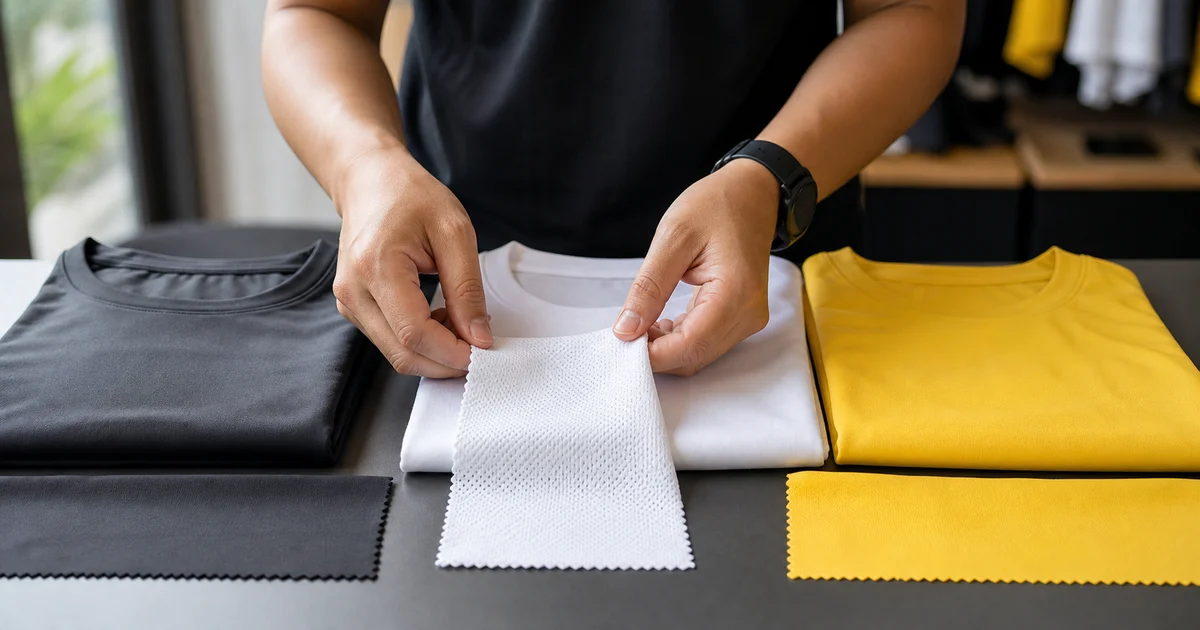
The same design can feel completely different on cotton, microfiber or performance polyester. Choosing the fabric first helps you select the right print method and avoid an uncomfortable shirt.
Cotton for everyday comfort
Cotton feels soft and familiar, making it a popular choice for company events, merchandise and casual uniforms. It works well with silk screen, DTF and DTG, depending on the garment and artwork.
Pure cotton absorbs moisture but can take longer to dry in humid weather. It may also shrink, so ask whether the garment is pre-shrunk and follow the supplier’s wash instructions.
Microfiber for active events
In Malaysia, “microfiber” often refers to lightweight synthetic sports fabric. It dries quickly and is commonly used for running events, outdoor crews and school sports.
The weave and surface vary widely. Some fabrics feel smooth, while others have small holes or a honeycomb texture. Request a sample because the marketing name alone does not tell you how it will feel.
Sublimation is suitable for light-coloured polyester garments. DTF and silk screen may also work when the printer has tested the specific fabric and temperature.
Polyester for jerseys and uniforms
Polyester holds shape well, dries quickly and supports all-over sublimation printing. It is widely used for custom jerseys and performance polos.
Heat-sensitive fabric needs controlled pressing. A printer should test for shine, colour migration and press marks before producing the full order.
Blends for balance
Cotton-polyester blends can combine a softer feel with faster drying and better shape retention. The exact ratio affects printing, so send the composition to the factory rather than describing the shirt only as a blend.
What does GSM mean?
GSM means grams per square metre and describes fabric weight, not quality. A lighter shirt can feel cooler, while a heavier shirt may feel more structured. Construction, yarn and finishing also affect opacity and comfort.
A simple selection checklist
Before choosing, consider the wearer, activity, weather, print method, colour, washing frequency and budget. Compare actual samples in daylight and, for uniforms, wash one sample before ordering the full batch.
Then send the same specification through our custom shirt quote form so factories price comparable garments.
Ready to compare suitable printers?
Get 5 Free Quotes