
What Does T-Shirt GSM Mean? 160, 180 and 200 GSM Compared
Understand T-shirt GSM, compare 160, 180 and 200 GSM fabrics, and specify weight, composition, opacity and samples for a Malaysian bulk order.
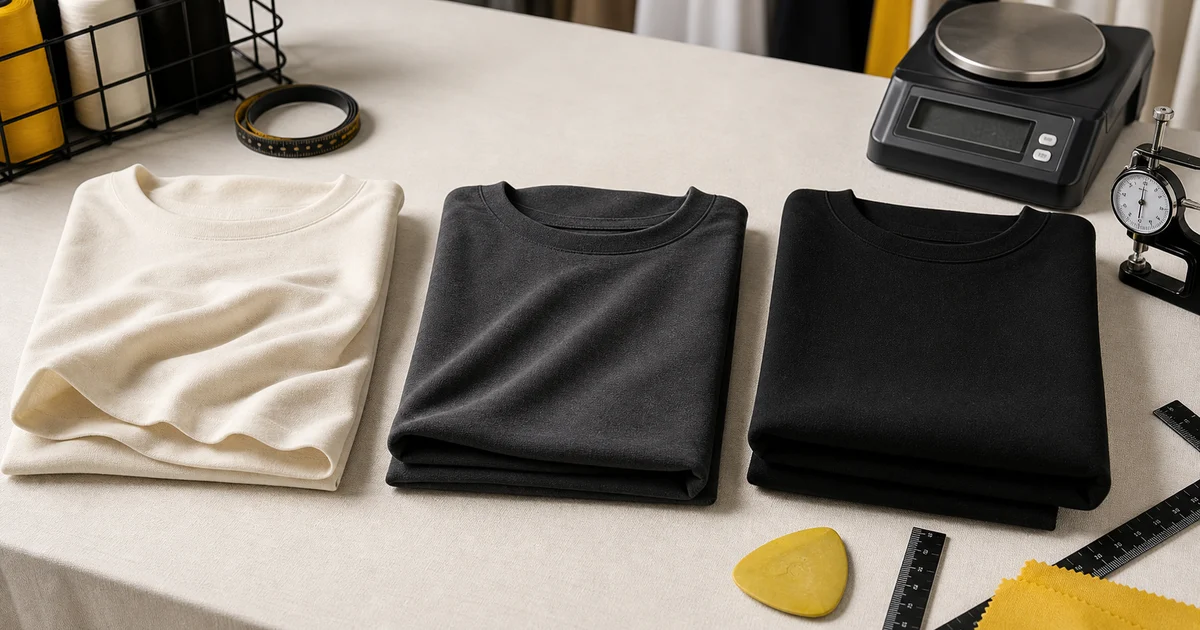
The short answer: GSM means grams per square metre, a measure of fabric mass per unit area. A 160 GSM shirt uses lighter fabric than an otherwise comparable 180 or 200 GSM shirt, but higher GSM does not automatically mean better quality.
GSM also does not equal the finished shirt’s weight. A garment uses less or more than one square metre depending on its size and pattern, then adds rib, thread, labels and print. Use GSM to compare fabric specifications—not to predict the exact parcel weight.
How do 160, 180 and 200 GSM compare?
| Fabric weight | Likely character in a comparable knit | Practical starting use | Check before approval |
|---|---|---|---|
| 160 GSM | Lighter, softer drape, may dry faster | Outdoor events, giveaways, high-volume casual orders | Opacity, collar recovery and shape after washing |
| 180 GSM | Middle-weight balance of drape and structure | Company shirts, class shirts, everyday merchandise | Actual hand-feel, fit and print surface |
| 200 GSM | Heavier, more substantial and structured | Premium merchandise, oversized styles, cooler indoor settings | Heat comfort, drying time and bulk at the collar |
The comparison works only when composition, knit and finishing are similar. A 180 GSM cotton jersey and a 180 GSM polyester mesh can feel and perform very differently.
Is GSM an official measurement?
Textile laboratories measure fabric mass per unit area. ISO 3801 covers determination of mass per unit length and mass per unit area for woven fabrics and was confirmed as current in 2023. Suppliers commonly express mass per unit area as grams per square metre, shortened to GSM.
The number is useful because it is measurable. It is still only one specification. It does not tell you the fibre composition, knit density, yarn quality, finish, shrinkage, opacity or sewing standard.
When should you choose 160 GSM?
Start around 160 GSM when low weight and easy movement matter. It can suit outdoor programmes, volunteer shirts and large event orders where wearers prefer a lighter garment.
Inspect pale colours carefully. A lighter fabric may be more transparent, particularly when stretched or damp. Also check whether the collar and shoulder seams recover after washing; saving fabric weight is not useful if the garment loses shape.
When should you choose 180 GSM?
Around 180 GSM is a versatile middle point for many casual T-shirts. It can provide more body than a lighter option without the substantial feel of a heavyweight shirt.
Do not treat 180 GSM as a universal safe answer. A dense knit may feel warmer, while an open construction may feel airier at the same GSM. Compare the exact colour and size because dye, finishing and garment dimensions can change the final impression.
When should you choose 200 GSM?
Around 200 GSM suits buyers who want a more structured hand-feel, stronger drape or a heavier merchandise style. It can also help a pale shirt feel less revealing when the construction is otherwise suitable.
The trade-off is additional mass. For active outdoor use in Malaysia, test the shirt while moving rather than assuming “premium heavyweight” will be comfortable. The cotton versus quick-dry guide explains how activity and moisture change the choice.
Why can two shirts with the same GSM feel different?
GSM does not control every fabric property. Two 180 GSM shirts may differ because of:
- cotton, polyester or blended fibre content;
- single jersey, interlock, pique or mesh construction;
- yarn thickness and surface texture;
- compacting, brushing or moisture-management finishes;
- dye and colour;
- collar rib and seam construction; and
- shrinkage or shape after washing.
That is why a quotation should identify the garment code and sample, not only “180 GSM round-neck T-shirt”.
What should you put in the quotation brief?
Give every printer the same minimum specification:
- intended wearer and activity;
- fibre composition and preferred knit;
- target GSM or an acceptable range;
- garment colour and size range;
- artwork, print size and positions;
- opacity and hand-feel expectations; and
- whether a washed or printed sample must be approved.
Ask the supplier to state any tolerance around the quoted GSM. Then compare physical samples under the same light, try the correct size and wash one sample before approving a large repeat order.
For a broader material comparison, read the Malaysia T-shirt fabric guide. You can then browse printers by Malaysian location or request comparable quotations.
Frequently asked questions
What does GSM mean for a T-shirt?
GSM means grams per square metre and states the mass of a square metre of fabric. It describes fabric weight, not the total weight of one finished shirt or its overall quality.
Is 180 GSM good for a T-shirt?
180 GSM is a practical middle-weight starting point for many everyday shirts, but suitability still depends on fibre, knit, colour, finish and intended activity. Approve the exact sample instead of buying by GSM alone.
Is 200 GSM too hot for Malaysia?
Not automatically, but 200 GSM fabric is generally heavier and more structured than 160 GSM in an otherwise comparable construction. Test the actual garment during the intended activity because airflow and fibre also affect comfort.
Does higher GSM mean better quality?
No. Higher GSM means more fabric mass per unit area; quality also depends on yarn, knitting, finishing, dimensional stability, colourfastness, stitching and consistency.
Ready to compare suitable printers?
Get 5 Free Quotes