
Corporate Polo Materials Compared: Lacoste, Cotton and Microfiber
Compare pique or Lacoste, cotton-rich and microfiber polo shirts for Malaysian office, retail, outdoor and mixed-duty corporate teams.
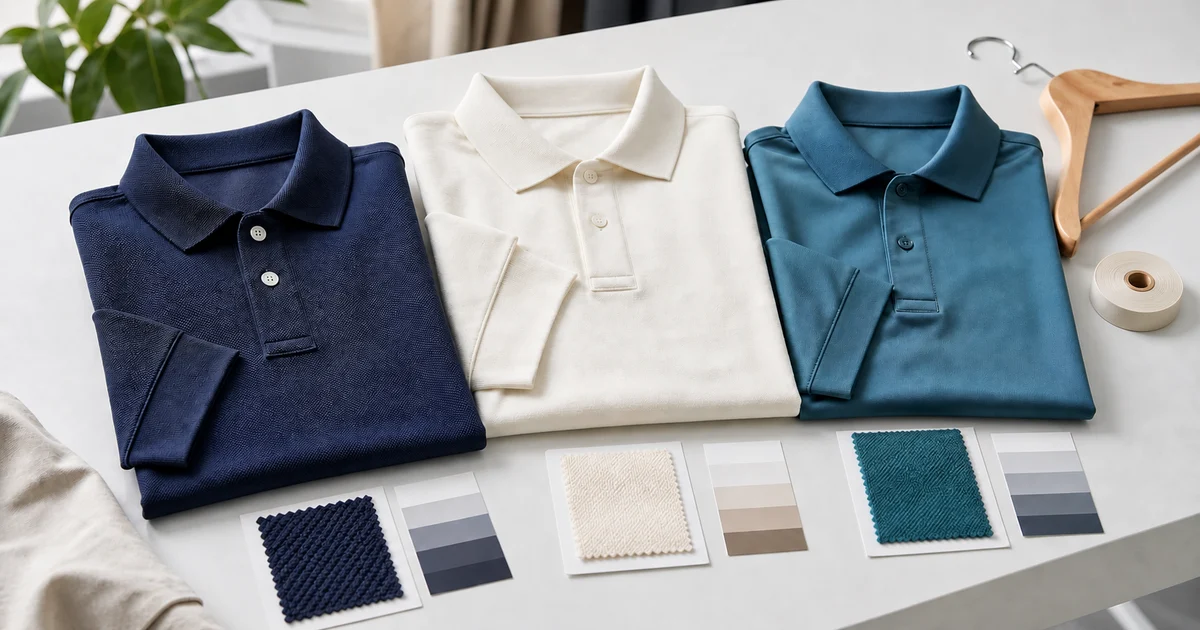
The short answer: choose a cotton-rich pique polo for a structured, comfortable office look, microfiber for outdoor or active staff who need quicker drying, and a cotton-polyester blend when the same uniform must balance comfort, shape retention and easier care. “Lacoste”, “pique” and “quick dry” are not complete specifications—ask for the exact composition, GSM and sample.
In Malaysian uniform catalogues, polos sold under similar material names can differ substantially. Oren Sport’s current catalogue includes 100% microfiber polos around 140–170 GSM, a 65% polyester/35% cotton polo at 175 GSM, and a 60% combed cotton/40% polyester pique polo at 240 GSM. The label alone cannot tell you how the shirt will feel or perform.
Corporate polo material comparison
| Material offered by supplier | Best starting use | Main advantage | Check before ordering |
|---|---|---|---|
| Pique or “Lacoste” knit | Reception, sales, office and smart-casual teams | Textured, recognisable polo appearance | Fibre composition, GSM, collar structure and whether the name denotes a fabric or product line |
| Cotton-rich polo | Air-conditioned, indoor and customer-facing work | Softer, familiar hand feel | Shrinkage, drying time, colourfastness and shape after washing |
| Microfiber or quick-dry polo | Outdoor crew, event staff, field sales and active work | Lightweight feel and quicker drying | Surface texture, cling, opacity, odour after wear and heat sensitivity |
| Cotton-polyester blend | Mixed indoor/outdoor teams and frequent uniform rotation | Balances comfort with easier care and shape retention | Actual blend ratio, weave, weight and embroidery stability |
These are buying directions, not guarantees. Yarn, knit, finishing, cut and construction can make two polos with the same composition feel different.
What does “Lacoste fabric” mean in a Malaysian quotation?
Treat “Lacoste” as a supplier description that needs clarification, not proof of a branded garment or one fixed fibre. Local catalogues have used the term for textured polo products, while other suppliers use “pique”, “honeycomb” or a product code for a similar-looking knit.
Ask the supplier to state:
- fibre percentages;
- fabric weight in GSM;
- knit or surface description;
- garment brand and model code;
- unisex, men’s or women’s cut;
- available colours and size range; and
- whether the quote refers to ready-made stock or custom production.
Oren Sport’s current polo range shows why the full specification matters: its catalogue includes microfiber, polyester-cotton and cotton-rich products across different weights. Never assume the word “Lacoste” means 100% cotton or that it refers to the French fashion brand.
Choose cotton-rich pique for indoor presentation
A cotton-rich pique polo is a practical starting point for reception, retail, sales meetings and an air-conditioned office. The textured knit gives the familiar corporate polo appearance, while cotton content usually provides a softer, less slick hand feel than a lightweight performance fabric.
The trade-offs are moisture absorption, slower drying and possible dimensional change. Ask whether the garment is pre-shrunk, then wash one decorated sample using the care method staff will actually follow. Check collar curl, body length, colour and logo puckering after washing.
Do not compare cotton percentage alone. Oren Sport’s catalogue, for example, lists a 60% combed cotton/40% polyester pique polo at 240 GSM, while its cotton interlock polos use other weights and surface constructions. Weight describes grams per square metre, not automatic quality; the GSM guide explains how to read it.
Choose microfiber for outdoor and active work
Microfiber is commonly used as a Malaysian trade term for lightweight synthetic performance fabric. It is usually the more practical shortlist for event crews, delivery teams, site visits and long periods outdoors because it dries faster than an absorbent cotton-rich polo.
However, “microfiber” does not describe one standard weave. A smooth interlock, mini-eyelet and textured quick-dry fabric can differ in airflow, opacity, stretch and sheen. Oren Sport’s 2025–2026 catalogue lists 100% microfiber polo options at different GSM values, confirming that the category still needs a model-level comparison.
Wear-test the sample in the real working condition. Check whether it becomes clingy with perspiration, shows an undershirt, snags on equipment or develops press marks during decoration. For staff in sun and heat, also confirm that the fabric’s claimed UV or cooling feature is supported by the selected product—not merely assumed from “quick dry”.
Use a blend when one uniform serves several roles
A cotton-polyester blend can be the sensible middle option for teams that move between the office, showroom and short outdoor tasks. Cotton contributes a familiar hand feel; polyester can help the garment dry faster and retain shape. The ratio and knit determine the actual balance.
Do not accept “CVC”, “TC” or “blend” without percentages. A Malaysian catalogue may list 60% cotton/40% polyester for one CVC polo and 65% polyester/35% cotton for another TC polo. Those products will not necessarily feel or behave the same.
If departments have genuinely different working conditions, one material for everyone may be a false economy. Keep the colour and embroidery layout consistent while allowing an office polo and a performance polo, then approve how closely their fabric colours match.
Match the polo to embroidery and printing
Pique and textured knits can support embroidery, but small details may sink into the surface without suitable digitising, backing or topping. Lightweight microfiber can pucker or show press marks if the decoration process is not tested. A cotton-rich fabric may accept several print methods, but a large printed area can change its feel.
Before approval, ask for the company logo on the exact polo model and colour. Review:
- logo dimensions and position;
- readable small lettering;
- flat fabric around embroidery;
- backing comfort against the skin;
- heat or press marks;
- colour migration on polyester-rich fabric; and
- appearance after one wash test.
Use the corporate polo embroidery guide for the complete decoration checklist and the minimum embroidery detail guide for small text.
Compare samples under real working conditions
Order or borrow the actual size set before collecting staff sizes. Let representative wearers try the garments in air conditioning, outdoors and during normal movement. Compare the smallest and largest sizes because collar, sleeve and body proportions may change across the range.
Run one controlled wash test and record the garment model, colour, size, composition and care method. Do not substitute another colour or an undecorated sample when checking shrinkage, embroidery or heat effects.
Send a polo specification, not a material nickname
Your quotation brief should include staff role, indoor/outdoor use, garment code, composition, GSM, colour, cut, size quantities, logo method, positions, sample requirement, deadline and delivery postcode. If alternatives are allowed, require each supplier to identify the substituted model and composition.
You can compare Malaysian uniform suppliers with one brief or browse T-shirt and polo suppliers by state. Approve the actual polo after wear, decoration and wash checks—not from a swatch name alone.
Frequently asked questions
Which polo material is best for a corporate uniform in Malaysia?
Choose a cotton-rich pique polo for a structured, comfortable office look; microfiber for outdoor or active teams that need faster drying; and a cotton-polyester blend when one uniform must balance comfort, shape retention and easier care. Approve the actual garment because trade names alone do not define performance.
Is Lacoste fabric the same as cotton?
Not necessarily. In Malaysian apparel catalogues, Lacoste often refers to a textured pique-style polo fabric or product family, while the fibre content may be cotton, polyester or a blend. Ask for the exact composition and GSM instead of assuming from the name.
Is microfiber suitable for an embroidered company logo?
It can be, but thin, stretchy or textured microfiber needs the correct backing, needle and stitch settings. Approve a sew-out on the exact polo model because a sample embroidered on a heavier cotton polo is not equivalent.
Should corporate staff wear cotton or quick-dry polos?
Cotton-rich polos suit customer-facing and air-conditioned work where softness and a structured appearance matter. Quick-dry microfiber is usually more practical for outdoor crews, events and active work, but the final choice should follow a wear and wash test.
Ready to compare suitable printers?
Get 5 Free Quotes