
Can You Bring Your Own T-Shirts for Printing in Malaysia?
Check whether a printer accepts your own shirts, what to test, how to compare print-only costs and what to record before handing garments over.
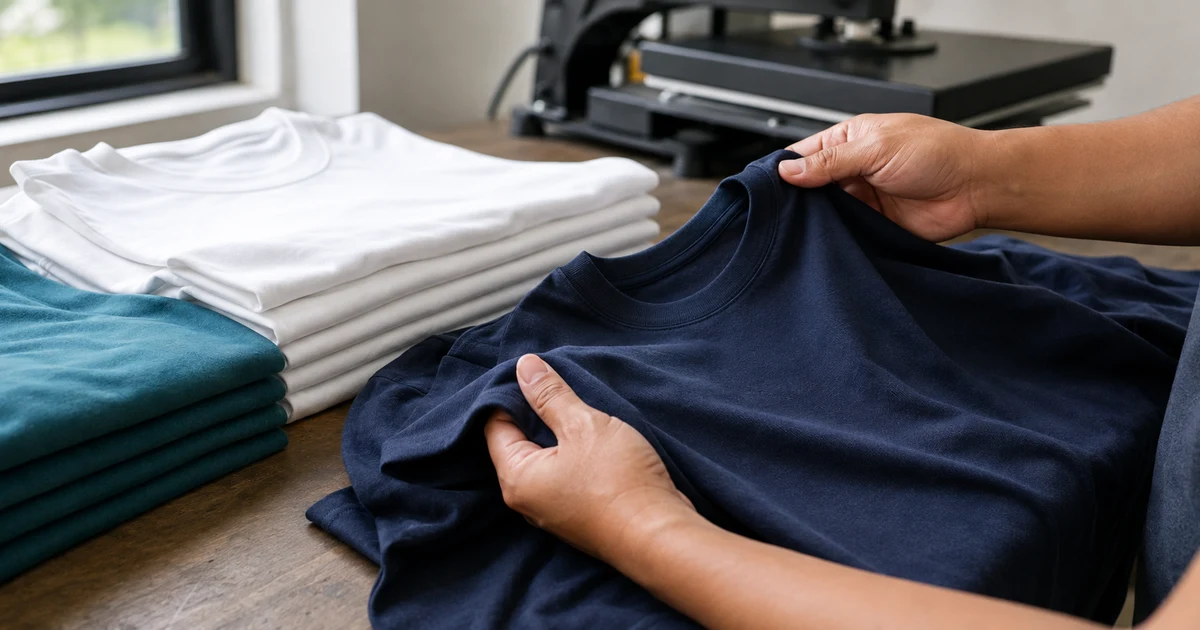
The short answer: yes, some Malaysian printers let you bring your own T-shirts for printing. However, a printer accepting outside garments does not mean every fabric, colour or existing shirt is suitable. Confirm the exact garment, test requirement, total price and handling terms before you buy the blanks or send them in.
This service is often described as print-only or customer-supplied garments. It suits a buyer who already has suitable shirts, but it adds a handover between the garment seller and the decorator.
Confirm acceptance before buying the shirts
Ask the printer to approve the brand, product code, composition, colour and proposed artwork—not just “a cotton shirt”. Send clear photos of the front, back, fabric label and intended print area.
As one local example, OwnTee’s custom-apparel FAQ says customers can supply garments at its Cheras Pandan Indah showroom or send them by courier at their own delivery expense. That is one supplier’s published arrangement, not an industry-wide promise or a Baju Printz policy. Reconfirm the current terms with your chosen printer.
If you have not purchased the shirts yet, ask for two quotations: print-only on your selected blank, and supply-and-print using the same or an explicitly identified alternative garment. The quotation comparison guide helps keep the specifications equivalent.
Send a garment record, not only an artwork file
Give the printer enough information to decide whether to accept the work:
| Detail | What to provide |
|---|---|
| Garment identity | Brand, product code, supplier and clear photographs |
| Fabric | Composition from the label; known coatings or finishes |
| Condition | New or worn, washing history, existing print and visible defects |
| Quantity | Required finished quantity, size breakdown and separate test pieces |
| Decoration | Artwork file, method if specified, positions and dimensions in cm |
| Deadline | Date the finished shirts must reach you, not just the event date |
| Handover | Collection or courier, return address and one contact person |
Do not remove labels before the printer has checked them. If the fabric composition is unknown, say so rather than guessing from how it feels. “Dry-fit” on a sales listing is not a complete material specification; see the fabric guide.
Test the actual garment combination
The question is whether the chosen decoration works on this garment, not whether a method generally works on cotton or polyester.
STAHLS’ explanation of dye migration describes garment dyes bleeding into transfers and notes that polyester dye stability can vary between fabric lots. For a dark polyester team shirt, ask the printer how it will assess colour bleed rather than assuming a white print will remain unchanged.
Coated outerwear needs separate attention. Transfer Express’s nylon-printing guidance warns that waterproofing can affect transfer adhesion and recommends testing. Approval of a plain T-shirt therefore should not be treated as approval of a coated jacket in the same order.
Ask the printer to identify which garment types, colours or batches need a trial. Agree what the test checks: appearance, adhesion, heat marks, print feel and, where required, washing under agreed care instructions. A trial can alter or consume the garment, so identify test pieces separately from the quantity you need to wear.
Use a physical sample approval record before releasing the remaining stock. A successful sample reduces uncertainty; it does not make a mixed batch of unknown garments identical.
Compare the complete cost in ringgit
Use this simple comparison:
Print-only total = blanks + inbound delivery + decoration and setup + agreed testing + packing + return delivery.
Ask whether the quoted price includes sorting different garment types, individual names, artwork preparation and repacking. Request the amount and reason for any additional charge before authorising it; do not assume all printers charge the same way.
For a buyer in Sabah or Sarawak using a Peninsular printer, include both the journey to the printer and the return shipment. Keep those costs separate from production time. A nearby handover may be more practical, but compare the finished specification and full cost rather than distance alone.
Record what happens if a garment is damaged
Before handing over valuable stock, ask for written answers to these practical questions:
- Which pieces may be used for testing, and who pays for them?
- What happens if the fabric is rejected after inspection?
- How will a production error be recorded and handled?
- Is an identical replacement available, and who arranges it?
- What remedy is offered if replacement stock is unavailable?
- Who pays for return delivery of unused or rejected garments?
These are points to clarify with the supplier, not a statement that a particular exclusion or compensation limit is valid. For a vintage, sentimental or otherwise irreplaceable shirt, decide whether you can accept the possibility of permanent change before approving a trial.
Count the shirts at both handovers
Pack by product, colour and size. Attach a count sheet, photograph pre-existing defects and ask the printer to acknowledge the received quantities and condition. Keep test pieces clearly separated.
For example, if a committee needs 40 finished shirts and agrees to provide two additional test shirts, write 40 required finished + 2 test pieces = 42 supplied. The test pieces are not automatically part of the promised 40.
At collection, reconcile finished, unused, rejected and test pieces against that record. Inspect the decoration before distributing the shirts, using the delivery inspection checklist.
Ask for a print-only quotation clearly
Send a short request: “I will supply the garments. Please confirm acceptance of the attached product, the test pieces needed, decoration price, all handling and delivery charges, and the agreed process if a garment cannot be printed.”
You can request quotations through Baju Printz with those details. Confirm the selected printer’s acceptance before purchasing or dispatching your shirts.
Frequently asked questions
Can I supply my own T-shirts to a printer in Malaysia?
Some Malaysian printers accept customer-supplied garments, but acceptance depends on the printer, garment and decoration method. Send the product details and request written confirmation before buying or delivering the shirts.
Is print-only service always cheaper than buying printed shirts?
No. Compare the blank shirts, delivery to the printer, printing, setup, testing, packing and return delivery against a supply-and-print quotation for the same specification. A lower printing fee does not automatically mean a lower total cost.
Can a printer decorate a shirt that has already been worn?
Ask first and disclose washing, wear, stains, damage and any existing decoration. The printer needs to inspect the actual condition and may decline the garment. Do not send an irreplaceable shirt without agreeing what happens if a test or production attempt fails.
How many spare shirts should I supply for testing?
Agree the number with the printer for each garment type, colour or batch that needs testing. Separate test pieces from the required finished quantity; there is no single spare-shirt percentage suitable for every print-only order.
Does Baju Printz guarantee that every listed printer accepts supplied shirts?
No. State that you need print-only service when requesting quotations, then confirm acceptance, testing, charges and garment-handling terms directly with the selected printer.
Ready to compare suitable printers?
Get 5 Free Quotes